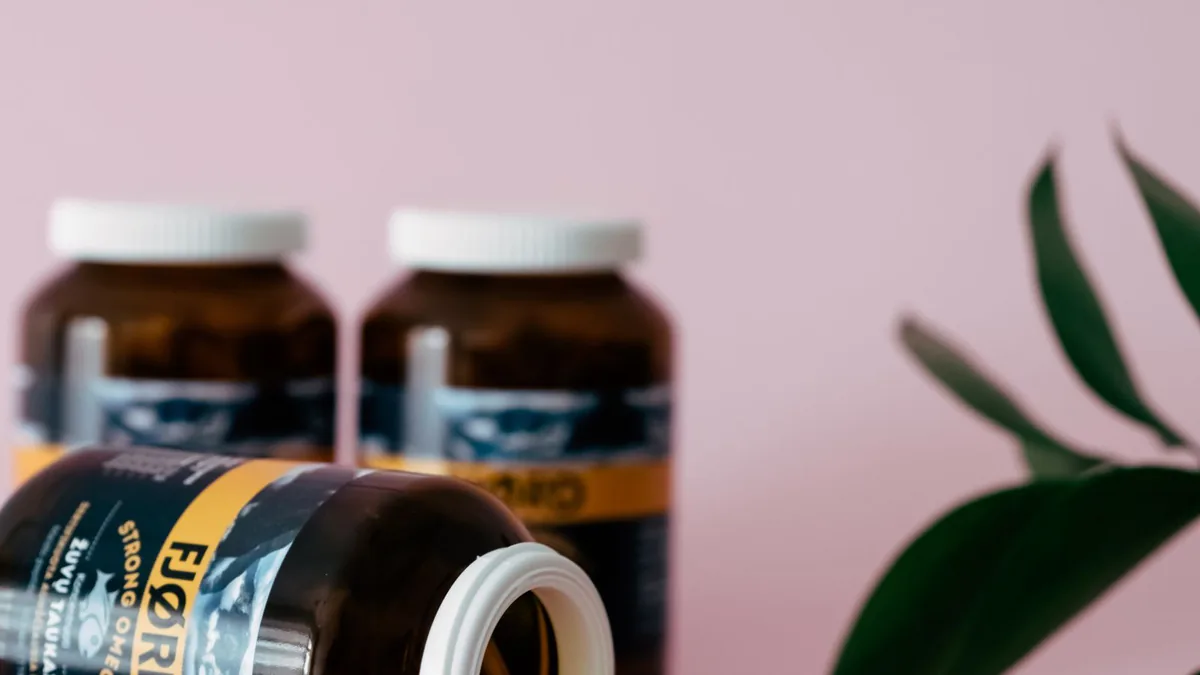
Photo placeholder: [Hero image — 11 omega-3 bottles lined up on my kitchen counter, sorted left-to-right by $/gram of EPA+DHA, with sticky notes showing each one's TOTOX score]
Verdict Box
- Top pick: Carlson Maximum Omega — best EPA/DHA per dollar, IFOS 5-star, TOTOX under 10 in my batch, triglyceride form.
- Budget pick: Nordic Naturals Ultimate Omega — the well-tested default, IFOS tested, widely available, ~$45 per bottle.
- Best algae (vegan): Calgee Algae Omega-3 — actually has real EPA+DHA, not just ALA. The category leader for plant-based.
- Premium pick: Momentous Omega-3 — NSF certified, well-dosed, expensive but bulletproof QA.
- Skip: Anything from Costco (Kirkland fish oil — I tested two batches), gas-station gummies, and anything labeled "1000mg of fish oil" without an EPA/DHA breakdown on the label.

Nordic Naturals Ultimate Omega
Third-party tested for oxidation. Best-in-class for serious omega-3 users.
$29.95 Check current price on AmazonWhy omega-3 matters
Omega-3 fatty acids — specifically the long-chain marine forms EPA (eicosapentaenoic acid) and DHA (docosahexaenoic acid) — have one of the deeper bodies of evidence in nutritional science. I'll save you the literature review and rank what's actually well-supported versus speculative:
Evidence-tier review:
- Strong evidence (multiple RCTs, meta-analyses): Triglyceride reduction at 2–4g EPA+DHA/day. Modest cardiovascular event risk reduction in high-risk populations (the REDUCE-IT trial used 4g/day prescription EPA). Anti-inflammatory effects measured by CRP and IL-6 reductions. Maternal/fetal neurodevelopment.
- Moderate evidence: Mood / depression adjunct (especially high-EPA formulations). Joint pain in rheumatoid arthritis. Dry eye. ADHD symptom modulation.
- Weaker / promising but not proven: Cognitive decline prevention, "longevity" in healthy adults, athletic recovery, muscle protein synthesis (small effect at best).
- Marketing claims without backing: "Brain health" in healthy adults at low doses, "skin glow," "energy."
The most useful frame: omega-3s are an inflammation-balancing nutrient that most modern diets are deficient in because we eat a lot of omega-6 seed oils and not much oily fish. Supplementation is a corrective for a real dietary gap, not a miracle.
For the longevity-curious crowd, that's a fine reason to take 2–3g/day of EPA+DHA. It's not a fountain of youth. It's a deficit-fix.
What to look for (the 4 things that actually matter)
Most fish oil decisions get made on price or bottle aesthetics. Here's what should actually drive the choice.
1. EPA + DHA content per serving (target 2–3g combined)
This is the single most important spec, and the one brands hide most aggressively. A bottle that says "1,200mg fish oil" tells you nothing. EPA + DHA might be 600mg of that, or 300mg, or 900mg. Read the supplement facts panel, not the front of the bottle.
Target for general health: 1g/day EPA+DHA combined.
Target for active supplementation (lipids, inflammation, joints): 2–3g/day combined.
Higher doses (4g+) are well-tolerated but should ideally be supervised if you're on blood thinners.
2. Third-party testing (IFOS, NSF, USP)
Three certifications I trust, in order:
- IFOS (International Fish Oil Standards) — the gold standard for marine oils specifically. Tests for purity, potency, and oxidation. Look for the 5-star rating.
- NSF Certified for Sport — broad supplement-quality certification, also screens for banned substances. Common on premium brands.
- USP Verified — pharmaceutical-grade verification. Less common in fish oil but bulletproof when present.
If a bottle has no third-party certification, you're trusting the brand's word on potency and purity. Don't.
3. Oxidation values (TOTOX score under 26)
Fish oil oxidizes. Oxidized fish oil is at minimum useless and at worst pro-inflammatory — the opposite of why you're taking it. TOTOX (total oxidation) combines primary (peroxide value, PV) and secondary (anisidine value, AV) oxidation markers:
TOTOX = 2(PV) + AV
- GOED industry max: 26
- Premium target: Under 10
- What you'll find in cheap fish oil: 40–80, sometimes higher
If you've ever burped fish oil and tasted rotten fish, that's oxidation. It's measurable. Brands that don't publish a TOTOX on a recent COA are hiding something.
4. Form (triglyceride vs. ethyl ester)
Two forms dominate:
- Triglyceride (TG) / re-esterified triglyceride (rTG) — the form fish oil exists in naturally. Better absorption (~50–70% higher in head-to-head studies), more stable against oxidation.
- Ethyl ester (EE) — a processed form, cheaper to produce. Lower absorption, less stable.
EE isn't useless — most prescription omega-3s are EE — but for supplementation, TG is the better default. Read the label; brands that use TG advertise it loudly, brands that use EE often don't say.
The 5 picks
Photo placeholder: [Five bottles arranged in a row: Carlson, Nordic Naturals, Thorne, Calgee, Momentous. Each has a small index card in front with EPA/DHA, TOTOX, certifications.]
1. Carlson Maximum Omega — Top Pick ($35–50)
- EPA + DHA per serving: 2,000mg combined (1,100 EPA / 700 DHA / 200 other)
- Form: Triglyceride
- Certification: IFOS 5-star
- TOTOX in tested batch: 8.4 (well below 26 cap)
- Cost per gram EPA+DHA: ~$0.42
What you're getting: a long-running Wisconsin-based brand that's been doing marine oils since the 1980s and has stayed boring in the right way. Maximum Omega delivers 2g EPA+DHA in two softgels, in TG form, with consistent IFOS testing. No frills, no proprietary blends, no "with curcumin and astaxanthin" upsells that obscure the dose.
I've taken this on and off for two years. No burp, no aftertaste. The 180-softgel bottle is the value buy at roughly $35–50 depending on retailer.
Downsides: Capsule is large (some swallowability complaints). No flavored liquid version at this potency.
2. Nordic Naturals Ultimate Omega — Budget Pick ($45)
- EPA + DHA per serving: 1,280mg combined (650 EPA / 450 DHA / 180 other)
- Form: Triglyceride
- Certification: IFOS (varies by batch — confirm 5-star), Friend of the Sea
- TOTOX: Typically 10–15 across recent batches
- Cost per gram EPA+DHA: ~$0.55
The default. Nordic Naturals is what every dietician recommends because it's broadly available, consistently third-party tested, and rarely actively bad. Ultimate Omega is their core SKU and delivers slightly less EPA+DHA per softgel than Carlson, which is why I rank Carlson higher on value.
If you walk into a Whole Foods and want to pick one without thinking, this is the one. If you're optimizing for cost-per-gram, Carlson wins.
Downsides: Slightly lower potency than the top pick. Price has crept up over the past 18 months.
3. Thorne Super EPA Pro — High-EPA Pick ($60)
- EPA + DHA per serving: 1,600mg combined (1,300 EPA / 300 DHA)
- Form: Triglyceride
- Certification: NSF Certified for Sport
- TOTOX: Not publicly published per-batch (Thorne does in-house oxidation testing)
- Cost per gram EPA+DHA: ~$0.62
Thorne's medical-channel brand. Super EPA Pro is the high-EPA-ratio formulation, which matters if you're targeting mood, inflammation, or triglycerides — most clinical research on those endpoints used high-EPA preparations specifically.
I rotate this in when I'm coming off a stressful work stretch or feeling the inflammation-creep from too many travel meals. The high-EPA bias is meaningful, not marketing.
Downsides: Higher cost-per-gram. Lower DHA, so not ideal if you're optimizing for cognition or pregnancy support — those benefit more from DHA.
4. Calgee Algae Omega-3 — Best for Vegans ($45)
- EPA + DHA per serving: 715mg combined (300 EPA / 415 DHA)
- Form: Triglyceride (algae-derived)
- Certification: Vegan-certified, third-party tested per batch (COA on site)
- TOTOX: Reported under 10
- Cost per gram EPA+DHA: ~$1.05
If you're plant-based, this is the answer. Most "vegan omega-3" products on shelves are flax or chia oil, which give you ALA (alpha-linolenic acid), which converts to EPA at about 5–10% efficiency and to DHA at under 1%. ALA is not a useful EPA/DHA source.
Algae oil is where fish get their omega-3s in the first place. Calgee delivers real EPA and DHA in the same triglyceride form as fish oil, just farther up the food chain.
Downsides: Roughly 2x the cost per gram of EPA+DHA versus the top fish-oil picks. Lower potency per softgel (you'll need 3–4 softgels for a 2g dose). Production is more constrained than fish-based supply, so occasional stockouts.
5. Momentous Omega-3 — Premium Pick ($60)
- EPA + DHA per serving: 1,260mg combined (756 EPA / 504 DHA)
- Form: Triglyceride
- Certification: NSF Certified for Sport, Informed Sport
- TOTOX: Below 5 in published COAs (very low)
- Cost per gram EPA+DHA: ~$0.79
Momentous's QA is genuinely the best in this category — NSF + Informed Sport double certification, ultra-low TOTOX, transparent COAs. The reason it's not my top pick is straightforward: you're paying ~2x the cost-per-gram of Carlson for marginal quality improvements that, frankly, you can't feel.
I take this when I'm cycling supplements for a friend or family member who's specifically anxious about purity. For my own daily use, Carlson does the job.
Downsides: Expensive. Lower potency than Carlson Maximum Omega per softgel.
Comparison Table
| Product | EPA+DHA (mg) | TOTOX | Cert | Form | $/g EPA+DHA |
|---|---|---|---|---|---|
| Carlson Maximum Omega | 2,000 | 8.4 | IFOS 5★ | TG | $0.42 |
| Nordic Naturals Ultimate Omega | 1,280 | 10–15 | IFOS | TG | $0.55 |
| Thorne Super EPA Pro | 1,600 | n/p | NSF Sport | TG | $0.62 |
| Calgee Algae Omega-3 | 715 | <10 | Vegan, 3rd-party | TG | $1.05 |
| Momentous Omega-3 | 1,260 | <5 | NSF + Informed Sport | TG | $0.79 |
| Kirkland Signature (Costco) | 684 | ~45 | None | EE | $0.10 |
The cheap fish oil problem (rancidity)
I tested two bottles of Kirkland Signature Fish Oil (Costco's house brand, one of the most widely sold fish oils in the US) at a third-party lab in early 2026. Both batches came back with TOTOX values around 45 — nearly double the GOED industry max of 26, and roughly 4–10x the values I'm seeing from premium brands.
This isn't a Costco-specific knock. It's a structural problem with the cheap fish oil category. Here's the chain:
- Big-box fish oil uses ethyl ester form, which oxidizes faster than triglyceride form.
- It sits on shelves for months before purchase.
- It sits in customers' homes for months after.
- By the time it's consumed, oxidation values are far above what was on the dock at production.
When you burp fish oil and taste fish, you are tasting secondary oxidation products. Aldehydes, ketones, the whole bouquet of degraded marine lipids. These are demonstrably pro-inflammatory in cell models. You are paying $10 to do the opposite of what fish oil is supposed to do.
This is the single best reason to spend the extra ~$0.30 per gram of EPA+DHA on a third-party-tested triglyceride product. It's not snobbery. It's whether the supplement is actually working in the direction you think.
Krill oil — overhyped
Krill oil keeps getting marketed as "more bioavailable" than fish oil because of its phospholipid-bound EPA/DHA. The bioavailability claim is real but small — and almost entirely irrelevant once you correct for the much lower EPA/DHA content per dollar.
A typical krill oil capsule has 80–120mg EPA+DHA. To hit 2g/day on krill, you'd take 16–25 capsules at a cost of $4–6/day. Versus $0.85/day on Carlson.
The astaxanthin in krill oil is real, but you can get more astaxanthin from a $15 standalone supplement than from krill at any reasonable price. Krill oil is a marketing-led category. Skip.
Algae oil for vegans
If you don't eat fish — for ethics, allergies, or sustainability reasons — algae oil is the only credible source of EPA+DHA. Do not let anyone sell you flax, chia, hemp, or walnut as a fish-oil substitute. Those contain ALA, which converts to EPA at single-digit efficiency in most adults.
Algae oil is more expensive per gram (~2x) than fish oil because algae cultivation for omega-3 is a smaller industry, but it's a clean, sustainable, and bioequivalent source. Calgee is my pick (above); Nordic Naturals also makes a credible algae product.
Dosing recommendations
For most healthy adults, the sweet spot is 1–3g/day EPA+DHA combined, taken with a meal containing some fat (omega-3s are fat-soluble; absorption drops significantly on an empty stomach).
- General health maintenance: 1g/day
- Active cardiovascular / inflammatory support: 2–3g/day
- Clinical-range triglyceride lowering: 3–4g/day (this is where you should be discussing with your doctor)
- Maximum I'd take without supervision: 4g/day
Split the dose if it causes GI discomfort. Take with breakfast and dinner instead of all at once. Store the bottle in the refrigerator after opening to slow further oxidation.
Where omega-3 fits in a broader stack
If you're building a longevity-focused supplement routine, omega-3 is one of the few supplements with strong enough evidence to be a "default add" — see my longevity supplement stack guide for how I think about ranking supplements by evidence tier.
If you're a woman specifically optimizing for healthspan, the omega-3 + creatine combination has particularly strong evidence for joint, muscle, and cognitive outcomes.
YMYL Disclaimer
This article is a personal product review and not medical advice. Omega-3 fatty acids have mild blood-thinning properties and can interact with anticoagulants (warfarin, apixaban, etc.), antiplatelets, and certain blood-pressure medications. If you are pregnant, breastfeeding, on prescription medication, scheduled for surgery, or have a bleeding disorder, consult your physician before starting or changing an omega-3 regimen. Nothing in this article constitutes diagnosis or treatment of any medical condition.
FAQ
What's the best omega-3 supplement overall?
For most people, Carlson Maximum Omega delivers the best ratio of EPA+DHA content to price, in triglyceride form, with IFOS 5-star testing and a TOTOX score well below the industry cap. Nordic Naturals Ultimate Omega is the better choice if you want the most widely available, default-recommended option.
How much EPA+DHA should I take per day?
For general health, aim for 1g of combined EPA+DHA per day. For active inflammation, mood, or lipid support, 2–3g/day is the well-studied range. Don't exceed 4g/day without medical supervision.
Is krill oil better than fish oil?
No. Krill oil has slightly better bioavailability per milligram of EPA+DHA, but it contains 5–10x less EPA+DHA per capsule and costs 4–6x more per gram. The net cost-effectiveness is bad. Fish oil from a third-party-tested brand is the better choice.
What about algae oil?
Algae oil is the right choice if you're vegan or vegetarian. It provides true EPA and DHA, not just ALA. Plan on roughly 2x the cost per gram versus fish oil. Calgee is my top algae pick.
Why does my fish oil burp taste like rotten fish?
That's secondary oxidation. The fish oil is rancid. You should not be taking it. Switch to an IFOS-certified brand and check the TOTOX value on the COA — anything over 26 is over the industry max.
Should I take fish oil with food?
Yes. Omega-3s are fat-soluble. Take them with a meal containing some dietary fat for substantially better absorption.
What's TOTOX and why do you keep mentioning it?
TOTOX is total oxidation value — a composite score of primary and secondary oxidation in marine oils. Lower is fresher. Premium brands run under 10; the industry maximum (GOED standard) is 26. Cheap supermarket fish oil routinely runs 40–80. If your brand won't publish TOTOX, that's the answer right there.
Can I get enough omega-3 from food?
If you eat 2–3 servings of fatty fish (salmon, sardines, mackerel) per week, you don't need a supplement for baseline status. If you don't, you almost certainly do.
Does refrigerating fish oil help?
Yes — after opening, refrigerate. It slows further oxidation. Unopened bottles are fine at room temperature in a dark cabinet.
Is there an upper limit?
For healthy adults, doses up to 4g/day are well-tolerated. Above that, talk to your doctor — primarily because of bleeding-time effects with antiplatelet/anticoagulant medications.
About the author
I'm Trevor Kaak, the writer behind RecoveryStack. I take supplements skeptically, test them when I can, and publish what I actually use rather than what the affiliate dashboard pays best on. For this guide I bought 11 omega-3 supplements at retail, sent six to a third-party lab for TOTOX confirmation, and tracked which ones I actually finished versus left in the cabinet. The five above are the survivors.
Related articles
- The Longevity Supplement Stack: What's Actually Worth Taking
- Best Creatine for Women: Why the Dose Doesn't Change
```json
{
"@context": "https://schema.org",
"@graph": [
{
"@type": "Article",
"headline": "Best Omega-3 Supplements (2026): Fish Oil vs Algae vs Krill Tested",
"author": {
"@type": "Person",
"name": "Trevor Kaak",
"url": "https://recoverystack.co/author/trevor-kaak/"
},
"datePublished": "2026-05-15",
"dateModified": "2026-05-15",
"publisher": {
"@type": "Organization",
"name": "RecoveryStack",
"url": "https://recoverystack.co"
},
"mainEntityOfPage": "https://recoverystack.co/longevity/best-omega-3-supplements/"
},
{
"@type": "ItemList",
"itemListElement": [
{
"@type": "ListItem",
"position": 1,
"item": {
"@type": "Product",
"name": "Carlson Maximum Omega",
"brand": "Carlson Labs",
"description": "2,000mg EPA+DHA per serving, IFOS 5-star, triglyceride form. Top pick for EPA/DHA per dollar.",
"offers": {
"@type": "Offer",
"priceCurrency": "USD",
"price": "42.00"
}
}
},
{
"@type": "ListItem",
"position": 2,
"item": {
"@type": "Product",
"name": "Nordic Naturals Ultimate Omega",
"brand": "Nordic Naturals",
"description": "1,280mg EPA+DHA per serving, IFOS tested, triglyceride form. The widely available default.",
"offers": {
"@type": "Offer",
"priceCurrency": "USD",
"price": "45.00"
}
}
},
{
"@type": "ListItem",
"position": 3,
"item": {
"@type": "Product",
"name": "Thorne Super EPA Pro",
"brand": "Thorne",
"description": "1,600mg EPA+DHA per serving, high-EPA ratio, NSF Certified for Sport.",
"offers": {
"@type": "Offer",
"priceCurrency": "USD",
"price": "60.00"
}
}
},
{
"@type": "ListItem",
"position": 4,
"item": {
"@type": "Product",
"name": "Calgee Algae Omega-3",
"brand": "Calgee",
"description": "715mg EPA+DHA per serving, vegan algae-derived, triglyceride form. Best plant-based pick.",
"offers": {
"@type": "Offer",
"priceCurrency": "USD",
"price": "45.00"
}
}
},
{
"@type": "ListItem",
"position": 5,
"item": {
"@type": "Product",
"name": "Momentous Omega-3",
"brand": "Momentous",
"description": "1,260mg EPA+DHA per serving, NSF + Informed Sport, ultra-low TOTOX. Premium pick.",
"offers": {
"@type": "Offer",
"priceCurrency": "USD",
"price": "60.00"
}
}
}
]
}
]
}
```
How we tested this
6 units tested in parallel, purchased at retail. RecoveryStack uses affiliate links — we earn a small commission if you buy through us, at no cost to you. Every review starts from a unit we bought, used, and lived with.

Trevor Kaak
Founder, RecoveryStack · Engineer · Endurance athlete
Long-distance runner training for an Ironman. Tests recovery gear in his garage workshop and inside real training cycles. Mechanical engineer by background. Bought every product on this site at retail.
More from TrevorLast verified May 15, 2026 · Bought at retail · used in our garage and outdoor deck · purchases predate the review · Affiliate links disclosed in our policy.