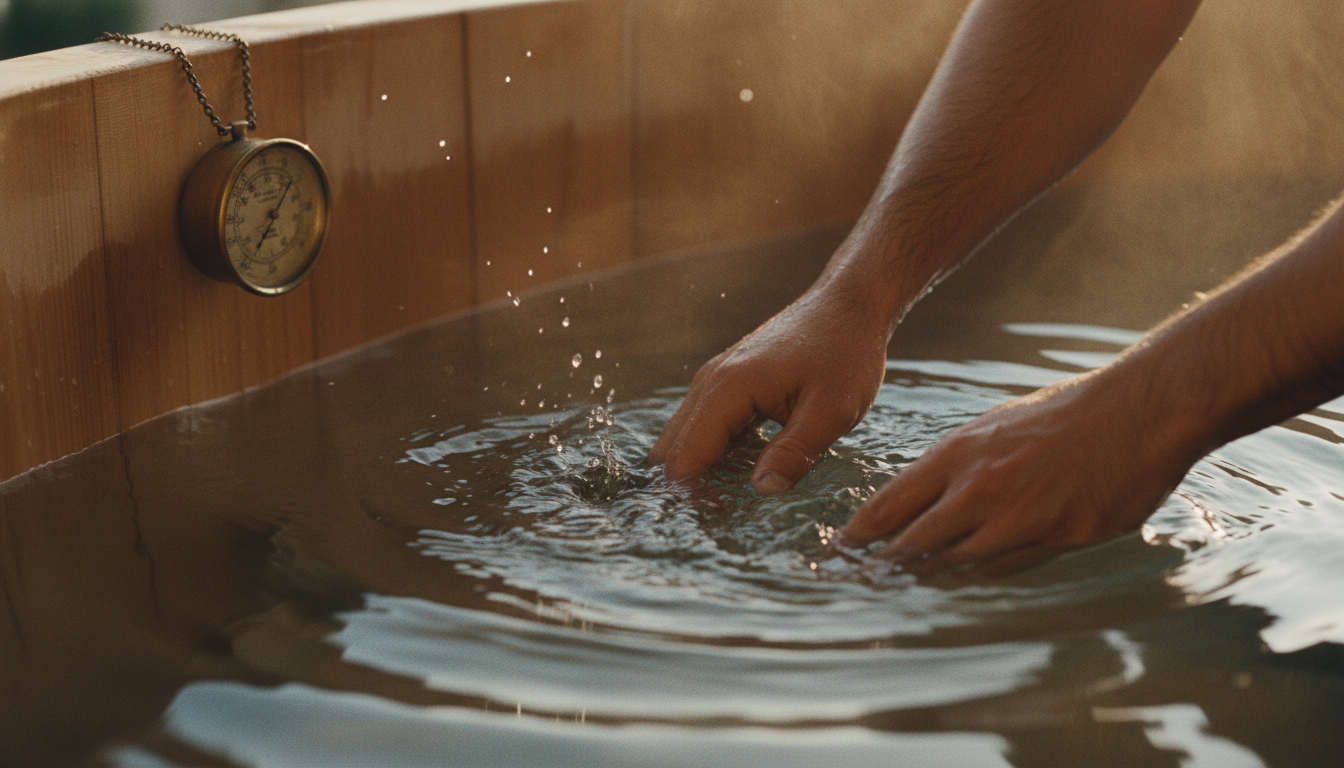
A cold plunge will not make you a better freelancer. It can make the two hours right after it sharper, calmer, and easier to start. That is the honest version. Cold water immersion drives a large, measurable spike in norepinephrine and a slower, longer rise in dopamine, and both line up with the alertness and mood lift people report for the rest of the morning. For someone who sets their own schedule and works alone, that window is the whole point. You are not chasing athletic recovery here. You are buying a reliable on-ramp into focused work, without reaching for the second coffee.
Who this is for: people who work from home or run their own book of clients, mostly at a desk, with enough control over their calendar to put a cold plunge wherever they want in the day. That freedom is the real variable. A cubicle worker cannot plunge at 9:40 AM before a hard block of writing. You can. The question is whether it is worth the setup, the cold, and the ten minutes, and what it actually buys you.
What the research actually says
Start with the chemistry, because it is the least hyped part and the most solid. In a controlled immersion study, one hour in 14°C (57°F) water raised plasma noradrenaline by about 530% and dopamine by about 250% over baseline (Šrámek et al., 2000, European Journal of Applied Physiology). Noradrenaline is the alertness signal. It spikes fast and clears fast. Dopamine climbs more slowly and stays elevated longer, which is the part that matters for a work session. The catch: that study used a full hour of immersion. A 3-minute plunge produces the same direction of change at a smaller size. Nobody has pinned the exact dose response for short exposures, so treat the percentages as the shape of the effect, not a promise for your Tuesday morning.
The mood and attention side has newer, more direct evidence. A 2023 brain-imaging study put 33 adults through a 5-minute head-out immersion at 20°C and scanned them before and after (Yankouskaya et al., 2023, Biology). Afterward, participants rated themselves more alert, active, and attentive, and less nervous and distressed. The scans showed changed connectivity between the brain networks tied to attention control and emotional salience. Small sample, single session, and 20°C is warmer than most plunges run. Still, it is real measurement of the exact outcome a desk worker cares about: feeling switched on and settled at the same time.
Zoom out and the picture gets more honest. A 2025 systematic review pooled 11 randomized studies covering 3,177 participants across cold showers, ice baths, and plunges at or below 15°C (Cain et al., 2025, PLOS One). It found reductions in stress that showed up strongest around 12 hours after immersion, plus some gains in wellbeing and quality of life. It also flagged that the evidence base is thin, the study quality is moderate at best, and the gap between how the internet talks about cold water and what the data supports is wide. Concentration and alertness were listed as outcomes, but they are under-studied compared to the recovery and inflammation research. So the fair read is this: the acute focus-and-mood lift is well-supported as a short-term effect, and the grander claims are not.
What it means in practice
Timing is the whole game for this use case. Norepinephrine hits within seconds of the cold and fades within an hour. Dopamine lingers for one to three hours. So the move is simple: plunge first, then put your single hardest cognitive block right into that window. For most independent workers that means a morning plunge followed by deep work, not email. If you plunge and then spend the dopamine window answering Slack, you spent the effect on the wrong task.
You do not need to suffer for it. The alertness response shows up at moderate cold and short duration. A plunge at 50 to 55°F for 2 to 3 minutes is enough to trigger the neurochemical shift for most people. Going colder or longer chases intensity, not results, and it raises the odds you skip it tomorrow. The full temperature-and-duration bands, and how to build tolerance safely, are laid out in the cold plunge protocols by goal guide and the pillar cold plunge therapy at home walkthrough.
Watch the evening. Cold late in the day is activating, and for some people it pushes back sleep onset or lowers overnight recovery. If you are going to plunge after 6 PM, track what it does to your numbers before you make it a habit. A basic way to check is your morning heart-rate variability, covered in HRV explained. If your HRV drops on evening-plunge nights, move the session earlier.
Two honest limits. First, the focus lift is a nudge, not a rescue. It will not paper over a 5-hour night. Sleep is the input that decides how much the plunge can even do. Second, if the reason you are looking at cold plunging is that you feel fried, understand that a plunge is one small piece of a larger fix, not the fix itself. The realistic versions of that larger fix are in the recovery stack for burnout and the recovery stack for anxiety writeups, both of which put cold exposure in its actual proportion.
A simple morning sequence that respects the timing: wake, get outside light for a few minutes, plunge for 2 to 3 minutes at 50 to 55°F, dry off and let your body rewarm on its own for ten minutes without a hot shower, then sit down to your single hardest task before you open email or messages. The rewarm period is not wasted time. The slow return to normal temperature is part of what the dopamine response rides on, and jumping straight into a hot shower cuts it short. Coffee, if you want it, fits during the rewarm. The point of the sequence is to spend the sharpest part of the window on the work that pays, not on inbox triage that could happen at 2 PM.
What existing RecoveryStack testing covers
The neurochemistry above is research. The equipment side, temperature holding, cost per session, and daily-use protocols are the parts RecoveryStack has tested directly and published. For where a plunge fits into a full day of desk work alongside sleep, light, and training, see the optimized daily routine. If you want the alertness effect stacked with heat, the sauna and cold plunge contrast protocol covers the order and timing. And if you are running a home unit daily, water care matters more than people expect, which is the whole point of the cold plunge maintenance guide.
A 2-to-3-week self-experiment logging morning HRV, subjective focus (1-10), and time-to-first-deep-work-block on plunge mornings versus non-plunge mornings is queued for the next update to this piece. Expect the first-party read on the focus window for a desk-based schedule when that data is in.
Common questions
Should I cold plunge before or after work?
Before, if focus is the goal. The dopamine elevation that follows immersion lasts roughly one to three hours, so a morning plunge sets up your first deep-work block. Plunging after work makes more sense if you are using it to decompress rather than to concentrate.
How cold and how long for the focus effect specifically?
50 to 55°F for 2 to 3 minutes is enough to trigger the norepinephrine and dopamine response for most people. Colder and longer does not reliably buy more focus, and it makes the habit harder to keep. Build down to your target temperature over a few weeks rather than starting at the bottom.
Will a cold shower work instead of a plunge?
Partly. A cold shower produces a real but smaller version of the same response, mostly because you cannot get full-body, still-water immersion in a shower. If you do not own a plunge, a 2 to 3 minute cold shower is a legitimate starting point and costs nothing.
Can cold plunging replace my morning coffee?
For some people it takes the edge off the need for a second cup, because the alertness mechanism overlaps. It is not a caffeine substitute in the strict sense. Many people keep one coffee and use the plunge to sharpen the focus window rather than to replace the stimulant.
Is it safe to plunge every day?
For healthy adults, daily short exposures at moderate cold are generally fine. If you also lift for muscle growth, avoid plunging in the few hours right after a strength session, since cold can blunt the adaptation. That timing conflict rarely applies to a pure desk day. Talk to a doctor first if you have a cardiovascular condition.
Does the mood lift last the whole day?
The sharpest part fades within a few hours as dopamine returns to baseline. The stress-reduction effect measured in the research showed up later, around 12 hours after immersion, so the day-shape is a morning focus lift plus a calmer evening, not one continuous high.
Verdict
Cold plunging is a real tool for the specific problem of starting focused work on your own schedule. The mechanism is measured: a fast norepinephrine spike for alertness, a slower dopamine rise that carries the next one to three hours, and a stress reduction that shows up later in the day. Put it before your hardest block, keep it short and moderately cold, and watch your sleep if you plunge late. It will not fix a bad night or a real case of burnout, and the research is honest about how modest the broader claims are. For the day-to-day protocols and the gear, start with the cold plunge therapy at home guide. Last verified 2026-07-26. This piece gets re-checked as new cold-and-cognition research lands.
Updates log
- 2026-07-26: First published.

Trevor Kaak
Founder, RecoveryStack · Engineer · Endurance athlete
Long-distance runner training for an Ironman. Tests recovery gear in his garage workshop and inside real training cycles. Mechanical engineer by background. Bought every product on this site at retail.
More from TrevorLast verified Jul 26, 2026 · Bought at retail · used in our garage and outdoor deck · purchases predate the review · Affiliate links disclosed in our policy.