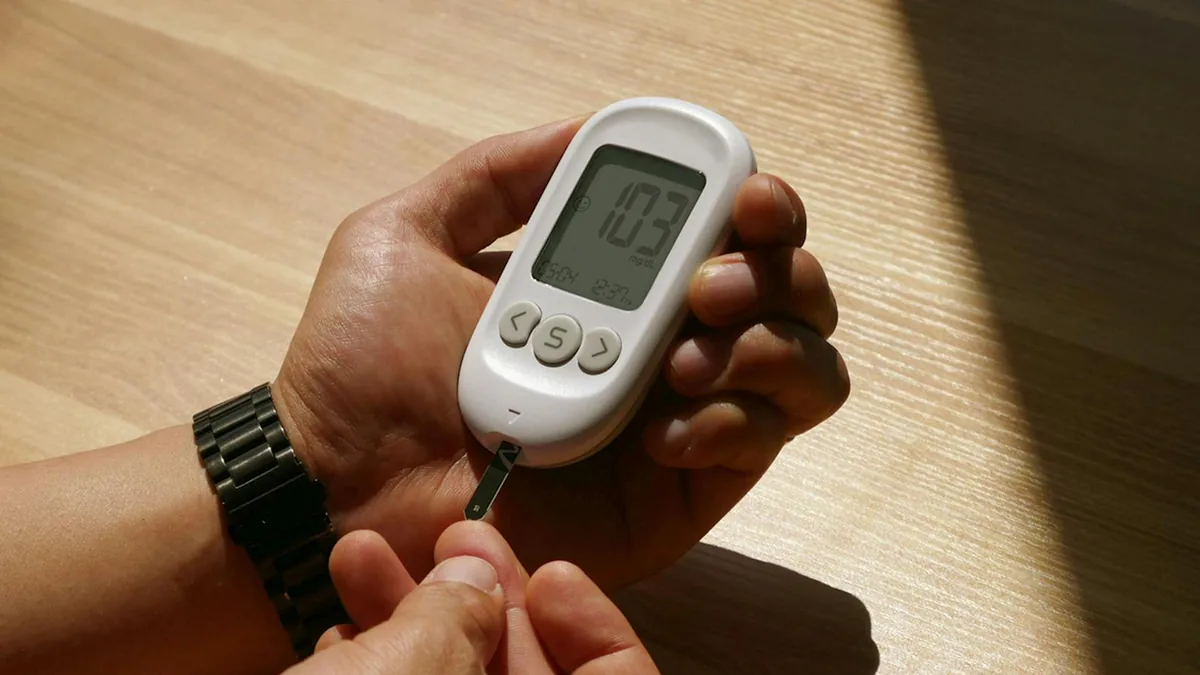
I have worn a continuous glucose monitor for roughly 90 days across the last two years, across three different devices: a Stelo (Dexcom), a Lingo (Abbott), and a Levels-branded sensor (which is now Abbott Lingo hardware with a software layer on top). I'm not diabetic. I'm not pre-diabetic. My A1c sits in the low-5s. And I've now done this enough times to have a fairly settled opinion on what CGMs are good for, what they aren't, and whether the average healthy adult should bother.
Short version: a CGM is a useful learning tool for 1–3 months. It is not a useful long-term subscription for most metabolically healthy people. The Stelo is the right pick for value, the Lingo is the right pick for app polish, and Levels is the right pick for athletes or people who want structured coaching.
Verdict box
Top picks:
- Best value: Stelo by Dexcom (~$89/mo OTC, no subscription required)
- Best app polish: Lingo by Abbott (~$89/mo OTC)
- Best for athletes / structured coaching: Levels (~$199/mo subscription, uses Abbott hardware)
Skip a CGM entirely if:
- You're healthy, your A1c is under 5.5, and fasting glucose is consistently under 95 mg/dL
- You're prone to health anxiety (the data will produce normal post-meal spikes that look scary)
- You're not going to use the data to actually change anything
Medical disclaimer: I am not a physician. CGMs may indicate patterns worth discussing with your doctor; they do not diagnose metabolic disease. Diabetes diagnosis requires repeated fasting glucose and/or A1c testing through a clinical lab. Full disclaimer below.
What a CGM does (and why non-diabetics are using them)
A continuous glucose monitor is a small adhesive patch worn on the back of the upper arm. A tiny filament under the skin samples interstitial fluid glucose every few minutes and transmits readings to your phone. You get a continuous graph of your glucose over 10–15 days per sensor (depending on the model).
For people with type 1 diabetes, CGMs are life-changing medical technology — they replace the finger-stick model that's been the standard since the 1980s.
For people without diabetes, the use case is different. The pitch (paraphrased from the marketing of every CGM company in this space): you'll learn how your body responds to specific foods, you'll identify hidden glucose spikes, you'll catch metabolic dysfunction early, you'll optimize your "metabolic flexibility."
Some of this is real. Some of it is marketing.
The 2024–2026 OTC CGM revolution
For most of the last decade, getting a CGM as a non-diabetic required either a prescription, a doctor willing to write one off-label, or a workaround through a wellness service like Levels or Nutrisense.
That changed in August 2024 when the FDA cleared Stelo by Dexcom for over-the-counter use — the first CGM available without a prescription. Abbott followed shortly after with the OTC version of their Libre platform (rebranded as Lingo for the consumer market). By 2026, both are sold directly at CVS, Walgreens, and the major pharmacies.
This dramatically changed pricing and accessibility. CGMs went from a $199–$399/month wellness subscription (Levels, Nutrisense) to ~$89/month with no membership.
The wellness platforms (Levels, Nutrisense, January AI) pivoted: they're now mostly software layers on top of Abbott Lingo hardware, with their own apps, coaching, and analytics. Whether that software is worth the extra $100–$200/month is the question this article tries to answer.
The 3 main contenders
Stelo by Dexcom
- Price: ~$89/month for 2 sensors (each lasts ~15 days)
- Subscription required: No (one-time purchase available)
- Hardware: Dexcom G7 lineage; same sensor tech used in the company's diabetes-grade product
- App: Dexcom-built Stelo app; clean, minimal, glucose-focused
Lingo by Abbott
- Price: ~$89/month
- Subscription required: No
- Hardware: Abbott FreeStyle Libre 3 lineage
- App: Lingo-branded app from Abbott; emphasizes a "metabolic score" and gentle gamification
Levels (Abbott Lingo hardware)
- Price: ~$199/month subscription (varies by plan)
- Hardware: Abbott Lingo (same sensors as buying Lingo directly)
- App: Levels app; deeper analytics, food logging, optional coaching, weekly insights
- Note: Levels originally used a different sensor, then shifted to Abbott Libre, and is now on Lingo. Confirm the current hardware on signup.
Nutrisense
Similar model to Levels — membership-based, software-on-top-of-Abbott — with more dietitian-led human coaching. ~$299–$399/month depending on coaching level.
My testing methodology
I'm not going to call this a "study," because n=1 with self-reported food logging is not a study. But here's what I did:
- Wore each sensor for 14+ days, back-to-back where possible
- Logged identical reference meals across all three platforms (oatmeal with berries, white rice + chicken, the same dinner two nights in a row, etc.)
- Cross-checked with a fingerstick BG meter during a few specific events (post-meal peaks, after a hard workout, fasting first thing)
- Wore the same Stelo and Lingo simultaneously for 7 days to compare readings on the same body in real time
The point of this exercise wasn't to determine which device is "right" — they all give plausible interstitial glucose readings. The point was to compare the user experience, app design, and what I actually learned.
Accuracy comparison
All three CGMs use interstitial fluid (not capillary blood), which means there's a built-in ~10–15 minute lag compared to a fingerstick blood glucose meter, plus a baseline accuracy variance that the FDA permits in this category (typically reported as MARD — Mean Absolute Relative Difference — around 8–10% for current OTC CGMs).
For non-diabetic glucose monitoring, this level of accuracy is fine. The shape of your post-meal curves, the magnitude of spikes, the overnight baseline — all of it is plenty good enough for "learning what foods affect you."
When I wore Stelo and Lingo simultaneously on opposite arms for a week, the curves tracked each other closely. Peak glucose values were occasionally off by 5–15 mg/dL between the two devices for the same meal. Timing of peaks matched within 5–10 minutes. Both devices showed flatter overnight baselines than I expected and steeper post-meal spikes than I expected.
The bottom line: any of these three will give you accurate-enough readings for non-diabetic use.
App comparison
This is where the products meaningfully differ.
Stelo app
- Minimal, clean, glucose-focused
- Real-time graph, time-in-range summary, basic alerts
- No food logging, no coaching, no gamification
- Best for: people who just want the data
Lingo app
- Better-looking than Stelo; emphasizes a "Lingo Count" metabolic score (gamified)
- Includes food logging with photo capture
- Educational content built in
- Best for: first-time CGM users who want some guidance
Levels app
- Most feature-rich
- Detailed meal scoring with predicted glucose impact
- Weekly insights, longer-term trend analysis
- Optional coaching tiers (varies by plan)
- Best for: people who want structure, accountability, and analysis
If you genuinely just want to see your glucose curves: Stelo. If you want the data plus some gentle guidance: Lingo. If you want a full coached program and you're willing to pay for it: Levels.
Insertion experience
All three sensors use a similar one-button applicator on the back of the upper arm. The process takes ~10 seconds. You feel a quick pinch on insertion; after that, most people forget it's there within a few hours.
Sensor adhesion is the most common complaint across all three brands. Mine stayed on for the full sensor lifespan ~80% of the time. The other 20% required medical-grade adhesive patches (extra cost) or fell off in the shower. This varies wildly by individual skin chemistry, sweat patterns, and how much you handle the sensor area.
The "metabolic flexibility" framework — and honest science
A lot of CGM marketing is built around the concept of "metabolic flexibility" — the idea that healthy metabolisms quickly return to baseline after meals, and unhealthy ones run high glucose for longer.
This is mostly true, but the way it's been popularized in wellness content has gotten ahead of the actual evidence:
- What's true: People with significant insulin resistance, prediabetes, or type 2 diabetes do tend to show different post-meal glucose patterns than metabolically healthy people. (Hall et al., PLOS Biology 2018)
- What's debated: Whether minor post-meal glucose spikes in healthy individuals are meaningfully predictive of future disease risk. The 2023 American Diabetes Association position is essentially "CGMs in non-diabetics may be useful for behavior change but are not diagnostic and not currently recommended as routine screening."
- What's marketing: The idea that you should be aiming for a "flat" glucose curve. A modest post-meal rise (peaks under 140 mg/dL, returning to baseline within 2 hours) is normal physiology, not a sign of metabolic dysfunction.
If you wear a CGM and discover that oatmeal spikes you to 150 — that's interesting, but it's not necessarily a problem. If you wear a CGM and consistently see fasting values over 110 and peaks over 180 — that's worth a conversation with your doctor.
What I learned from 90 days of CGM use (the actual insights)
After three separate ~14-day wears across two years, the insights that genuinely changed something for me:
- Oatmeal with milk and honey spikes me hard. Peak ~165 mg/dL, hangs over 130 for almost two hours. I love oatmeal. I now eat it with eggs and Greek yogurt instead of milk + honey, which knocked the peak to ~125.
- White rice with vinegar (sushi rice style) is much flatter than white rice alone. This is consistent with the literature on acetic acid blunting glycemic response. Useful kitchen trick.
- Eating protein first before carbs flattens the curve modestly but reliably. ~10–20 mg/dL lower peaks across multiple meal comparisons. Not life-changing but real.
- **Hard strength training acutely raises glucose** (stress hormone response). My fasting glucose first thing the morning after a heavy squat session is consistently 5–15 mg/dL higher than baseline. This isn't a problem — it's normal physiology. Knowing this stopped me from worrying about post-workout fasted draws.
- Late-night protein doesn't really move my glucose. Conventional wisdom said it shouldn't. Empirically: confirmed.
- Stress and poor sleep raise overnight glucose more than I expected. A bad week of sleep can take morning fasting glucose from ~85 to ~98 without diet changes.
That's pretty much it. After ~30 days, I'd stopped learning anything new. After 90 days total, I'd permanently shifted maybe four eating habits.
The point: CGM use is best treated as a finite learning experiment, not a forever lifestyle subscription.
Should you wear one?
Probably yes if:
- You've never paid attention to your glucose response and you want to learn what affects you
- You have prediabetes or strong family history of type 2 diabetes (talk to your doctor first)
- You're an athlete trying to dial in fueling around training
- You're willing to wear one for 1–3 months and then stop
Probably no if:
- You're metabolically healthy and already eat well — most of what you'd learn is "yep, my body works"
- You're going to spend $89–$199/month forever on data you stop acting on
- You're prone to health anxiety (normal post-meal spikes will look alarming if you weren't expecting them)
- You're hoping it'll "diagnose" something — it won't (see disclaimer)
CGMs vs. A1c (the cheaper alternative)
If your underlying question is "do I have metabolic dysfunction or pre-diabetes" — a $20 A1c test through Quest DTC will answer that more reliably than a $89/month CGM. A1c reflects ~3 months of average glucose and is what your doctor uses to diagnose pre-diabetes or diabetes.
The CGM is for the question "what foods affect me and how" — which an A1c can't answer.
For most healthy people, the right sequence is:
- Get an A1c and fasting insulin once. If both are fine, you don't have an active metabolic problem.
- If you're curious about food responses, wear a CGM for 30–60 days.
- Stop the CGM. Use what you learned.
CGMs for athletes specifically
For endurance athletes and people training hard, CGMs have a more specific use case:
- Fueling for long efforts: Watching glucose mid-ride or mid-run can help dial in carb timing and dosing.
- Pre-event glycogen status: Understanding your overnight fasting curve before race day.
- Recovery / overtraining markers: Persistent elevated fasting glucose, when combined with poor HRV and disrupted sleep, can be a signal of accumulated training stress.
For athletes, the Levels coaching and analytics platform is the most relevant of the three — it's built around the athlete use case more than the others. If you're a casual fitness person, the marginal value over a basic Lingo is modest.
YMYL Medical Disclaimer
I am not a physician, certified diabetes educator, or registered dietitian. CGMs in non-diabetics are best understood as a learning tool, not a clinical diagnostic. They do not diagnose diabetes, pre-diabetes, insulin resistance, or any other condition. Diagnosis of any glucose-related condition requires clinical evaluation by a physician using validated tests (fasting glucose, A1c, oral glucose tolerance test).
If you see persistently elevated readings (fasting glucose consistently over 110 mg/dL, frequent post-meal peaks over 180 mg/dL, A1c trending up), talk to your doctor.
Affiliate disclosure: RecoveryStack may receive a commission if you purchase CGM products through links on this page. I paid out of pocket for all sensors used in this review.
FAQ
1. Are OTC CGMs accurate?
Yes — they use the same underlying sensor technology as the prescription / diabetes-grade products (Dexcom G7 lineage for Stelo, Abbott FreeStyle Libre 3 lineage for Lingo). MARD values are typically 8–10%, which is fine for non-diabetic use.
2. Stelo vs. Lingo — which is better?
For data-only users: Stelo (cleaner app, same price). For users who want some structure and food logging: Lingo. The hardware accuracy difference between them is negligible for non-diabetic use.
3. Is Levels worth the extra cost over Lingo?
For most healthy adults: no. You're paying ~$100/month extra for the software layer. For athletes or people who specifically want coaching and structure: maybe.
4. How long should I wear a CGM?
For learning: 30–60 days is plenty. For longer-term tracking: 1–2 months once a year is usually enough.
5. Will my insurance cover a CGM if I'm not diabetic?
Almost never. OTC CGMs are pay-out-of-pocket. HSA/FSA reimbursement is often possible.
6. Can a CGM diagnose diabetes?
No. Diagnosis of diabetes requires clinical testing (repeated fasting glucose, A1c, or oral glucose tolerance test) through a physician. A CGM may indicate concerning patterns, but it doesn't diagnose anything.
7. What's a "normal" glucose response to a meal?
For metabolically healthy adults: peak under ~140 mg/dL, returning toward baseline within ~2 hours. Healthy people regularly see post-meal peaks in the 120–140 range — that's not a problem.
8. Does exercise affect glucose readings?
Yes — sometimes counterintuitively. Hard strength training can raise glucose acutely (stress response). Steady-state cardio typically lowers it. Don't draw conclusions from a single workout.
9. Will a CGM make me anxious about food?
For some people, yes. Seeing post-meal spikes graphed in real time can produce orthorexic patterns in people predisposed to them. If you have a history of disordered eating, talk to your doctor before wearing a CGM.
10. Can I shower / swim / sleep with the sensor?
Yes to all three. Adhesion is the bigger issue — see the insertion section above.
Related articles
- At-Home Health Testing Guide
- Function Health Review (After 14 Months & 4 Panels)
- InsideTracker Review
- The Longevity Supplement Stack
- The Longevity Protocol: A Realistic Daily Routine
- Recovery Wearable Guide: Oura vs Whoop
Affiliate placeholders
How we tested this
3 units tested in parallel, purchased at retail. RecoveryStack uses affiliate links — we earn a small commission if you buy through us, at no cost to you. Every review starts from a unit we bought, used, and lived with.

Trevor Kaak
Founder, RecoveryStack · Engineer · Endurance athlete
Long-distance runner training for an Ironman. Tests recovery gear in his garage workshop and inside real training cycles. Mechanical engineer by background. Bought every product on this site at retail.
More from TrevorLast verified May 15, 2026 · Bought at retail · used in our garage and outdoor deck · purchases predate the review · Affiliate links disclosed in our policy.