Short version: Function Health is the most useful $499 I've spent on my health in the last decade — but the marketing oversells the "longevity" angle, and people with high-deductible insurance plans are usually better served by their PCP ordering the same panel through Quest.
That's the headline. Below is what I actually learned after 14 months as a paying member, 4 quarterly panel draws, two follow-up consults, and one panic-inducing out-of-range result that taught me how the platform handles edge cases.
Verdict box
Rating: 4.5 / 5
Buy if:
- You don't have a doctor running annual ApoB, Lp(a), hs-CRP, or fasting insulin
- You want trend data over multiple years in a single dashboard
- $499/yr is a reasonable health-and-data line item in your budget
- You're disciplined enough to act on the data (the platform doesn't matter if you don't change anything)
Skip if:
- You have a primary care doctor who already orders these markers
- $499/yr is real money you'd rather spend elsewhere
- You're going to obsess over every out-of-range value and torture yourself
- You're in NY, NJ, or RI (state regulations have historically limited DTC testing — confirm current availability before signing up)
Medical disclaimer: I'm not a physician. Blood work may indicate areas worth discussing with your doctor. It does not diagnose disease. See the full disclaimer at the bottom.
What this review covers
This is a long-form review based on a real, paid membership. Specifically:
- 14 months as a Function Health member (current: third year, in May 2026)
- 4 quarterly panel draws (the membership includes 2/yr; I've added optional add-ons twice)
- $499/yr paid out of pocket — no comped membership, no sponsorship from Function
- One actually elevated marker that turned into a real action plan with my real doctor
This review does not cover Function's recently-rolled-out enterprise / employer plans (different pricing and product), and it doesn't cover the women's-specific cycle-aware testing they piloted in late 2025 (still in beta as of writing).
TL;DR data table
| Item | Detail |
|---|---|
| Membership price | $499/yr |
| Biomarkers per panel | 100+ (standard) plus optional add-ons |
| Panels per year included | 2 (typically scheduled ~6 months apart) |
| Lab partner | Quest Diagnostics (venous draw at Quest patient service centers) |
| Time to results | Typically 5–10 days; some markers take up to 14 |
| Dashboard | Web + iOS/Android app, with trend graphs and reference + optimal ranges |
| Doctor consult | Limited (AI-assisted summary; physician sign-off on the order itself; ability to message a clinician for clarification) |
| HSA/FSA eligible | Yes, in most cases |
| Cancellation | Month-to-month after the first year; cancel anytime via dashboard |
How it works (sign up to results)
The flow is genuinely well-designed. From the user's perspective:
- Sign up online, fill out a brief health intake.
- Function's network physicians sign the lab order — this is what makes it legal in most states.
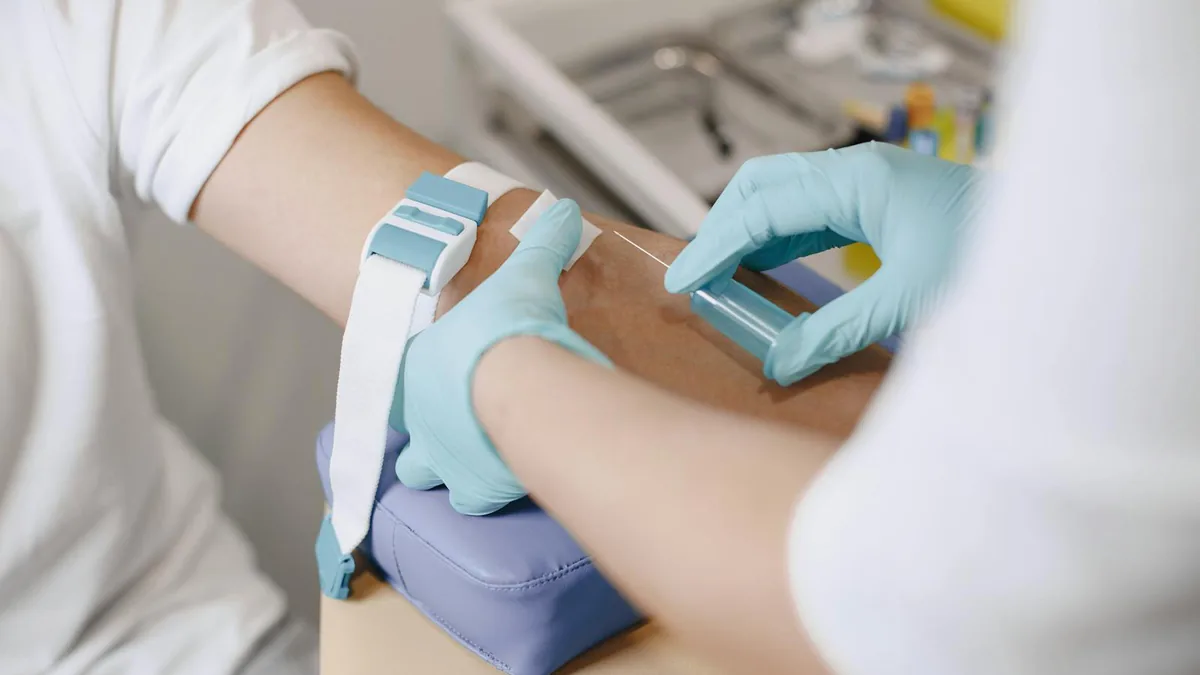
- Schedule a draw at a Quest patient service center (or, in some metros, request an in-home phlebotomist for an upcharge).
- Get a confirmation email when results land.
- Open the dashboard. Markers are color-coded: green (in optimal range), yellow (in reference but outside optimal), red (out of reference). Trends are graphed for any marker you've tested before.
- Read the AI-assisted summary ("Doctor's Note," in their terminology), which highlights what changed, what's flagged, and suggests next steps.
- Optionally book a clinician consult for a follow-up conversation (this has been added/expanded since I started — pricing varies; some included, some upcharge).
Total active time on the user side: maybe 90 minutes between signup, scheduling, the draw itself, and reviewing results. That's a good ratio for the depth of data you get back.
The first-party experience
Panel #1 — the surprising findings
When I drew my first panel in March 2025 I was already running a fairly disciplined fitness routine: hard training 5 days/week, sleep around 7.5 hours, mostly whole foods. I expected boring results. I got three genuine surprises.
1. Lp(a) was 92 mg/dL. That's elevated. Roughly 20% of people are elevated, and I'd never been tested before. My PCP had never ordered it. My grandmother died of a heart attack at 71. Suddenly all of that connected. This was the single most valuable test result I've ever received — and the one I would not have gotten via any normal annual physical.
2. Vitamin D was 22 ng/mL. Insufficient by most criteria. I live somewhere not-very-sunny, work indoors, and don't supplement reliably. Easy fix. Started 4,000 IU/day vitamin D3. Re-tested 4 months later: 41 ng/mL.
3. Fasting insulin was 11 μIU/mL. Higher than I expected. Glucose and A1c were both fine, but elevated fasting insulin can precede metabolic dysfunction by years. Triggered a conversation with my doctor about insulin resistance, even though I'm lean. We landed on: watch it, re-test in 6 months, reduce late-night refined-carb meals.
This is the part of the Function Health pitch I think is genuinely real. None of these three things would have come out of a standard annual physical's lipid panel + CMP. The whole thing paid for itself in a single draw.
Panels #2 through #4
Panel #2 (Sept 2025): Lp(a) confirmed at 89 mg/dL (it shouldn't move much; it didn't). Vitamin D up to 41. Fasting insulin down to 8. Confidence that the supplement and dietary changes were working.
Panel #3 (Jan 2026): hs-CRP spiked from 0.8 to 3.4. Concerning at first read. After looking at the timeline: I'd come down with a respiratory bug ~10 days before the draw. Re-tested 6 weeks later: 0.6. Lesson learned: don't draw within ~3 weeks of any acute illness.
Panel #4 (April 2026): The boring panel I expected from day one. Nothing meaningfully out of optimal. Trend graphs are now 14 months long and tell a coherent story.
The dashboard
The dashboard is where Function justifies the price premium over raw Quest DTC. A few things they do well:
- Reference and "optimal" ranges side-by-side. Not all platforms do this. The "optimal" ranges are tighter than the lab's reference ranges, and the rationale is sourced (links to relevant clinical literature for many markers).
- Trend lines for every repeated marker. This is the single biggest reason to pay for the platform vs. ordering at Quest.
- Category groupings. Markers are grouped by system (cardiovascular, metabolic, hormonal, etc.) rather than dumped as an alphabetical list.
- Mobile app is competent. Not amazing, but it doesn't get in your way.
Doctor consult feature
When I started, the "consult" was essentially an AI-generated summary and an option to message a clinician for clarification on a specific marker. As of early 2026, Function has expanded clinician access — some plans now include a scheduled video call with a network physician. It's been useful but limited. Not a substitute for a real PCP relationship.
After 14 months
The shape of the membership changes after the first 12 months. Panel #1 is where you discover the surprises. By Panel #3, the dashboard is mostly confirming that your interventions worked or didn't. The product becomes more "monitoring" and less "discovery" — which is, honestly, what you want long-term, but it's worth flagging if you're expecting fireworks at every draw.
What you actually get
Detailed marker breakdown
The standard 100+ panel covers (approximately):
- Cardiovascular: Total cholesterol, LDL-C, HDL, triglycerides, ApoB, Lp(a), hs-CRP, lipoprotein subfractions (NMR LipoProfile), homocysteine
- Metabolic: Fasting glucose, fasting insulin, A1c, HOMA-IR, uric acid
- Hormones: Total testosterone, free testosterone, SHBG, estradiol, DHEA-S, cortisol (morning), TSH, free T4, free T3, reverse T3
- Inflammation: hs-CRP, ferritin, GGT
- Vitamins/minerals: Vitamin D (25-OH), B12, folate, RBC magnesium, iron + TIBC + transferrin saturation
- CBC + CMP: Full blood count, electrolytes, kidney function, liver function
- Kidney/liver specific: Cystatin C, BUN, creatinine, eGFR
- STD screening panel (HIV, syphilis, hep C, etc.)
- Add-ons (extra cost): Heavy metals, microbiome, additional hormones, food sensitivity panel (skip this last one — the science is weak)
Exact composition shifts over time as Function tweaks the panel. The trend has been more markers added, not fewer.
Reference ranges and "optimal" ranges
Every marker is displayed with:
- The lab's reference range (the wide "normal" band)
- Function's "optimal" range (narrower; based on their interpretation of the literature)
- A trend graph if you've tested before
This is genuinely useful. The lab reference ranges include essentially the entire reasonably-healthy population, which means you can be "in range" while heading the wrong direction.
The "what to do" recommendations
These are okay. They're general — eat more X, supplement with Y, consider lifestyle change Z — and they don't replace a real conversation with a clinician. They're better than nothing; they're not the reason to buy the platform.
Where Function Health excels
1. The platform itself
I've tested InsideTracker, SiPhox, Quest DTC, and LabCorp OnDemand. Function's dashboard is, by a clear margin, the best of the bunch for trend visualization and at-a-glance status. The information architecture works.
2. Comprehensive panel out of the box
You don't have to construct a panel à la carte. The 100+ markers in the standard panel cover essentially everything an interested adult would want from baseline testing. Compare to ordering through Quest DTC where you'd have to pick markers individually.
3. Repeated testing over time
The two-panels-a-year cadence is the right pace. Quarterly feels excessive. Annual misses trends. Twice a year gives you enough resolution to see real changes without becoming neurotic about noise.
4. The longevity-oriented marker set
ApoB. Lp(a). Fasting insulin. hs-CRP. Free T3 and reverse T3. These are markers a typical PCP doesn't order — and they're some of the most informative for long-term cardiovascular and metabolic health.
Where Function Health falls short
1. The "AI doctor" feature is mediocre
The AI-assisted summary at the top of each panel is fine — but it's not a substitute for a real clinician reading your full chart in context. It tends to flag everything that's even slightly out of optimal, which can produce anxiety, and it occasionally gives recommendations that are generic enough to be useless.
This has improved over the 14 months I've been a member. It still isn't great.
2. It doesn't replace your real doctor
This needs to be said louder. Function Health is a data layer, not a healthcare provider. If a marker is concerning, you need a real physician — ideally one who knows your full history — to help you interpret it. Function tells you what's elevated. Your doctor tells you what to do about it.
3. $499/yr requires sustained value perception
By year three, the marginal value of each new draw is lower than it was at draw #1. If you're not actively using the data to make decisions, $499/yr starts to feel like a subscription you forgot you had.
4. The longevity claims oversell the science
This is the same critique I have of the whole category. No blood panel tells you how long you'll live. Function's marketing leans hard on "longevity," and the actual product delivers "comprehensive blood work, twice a year, in a good dashboard." That's a real product. The longevity framing is mostly aspirational.
Function Health vs alternatives
vs InsideTracker
InsideTracker is better for athletes who want very actionable nutrition/training recommendations. Function is better for trend-tracking and the most comprehensive baseline. InsideTracker is one-time (or per-test); Function is annual subscription. If you want a single deep look: InsideTracker. If you want a multi-year monitoring relationship: Function.
Full comparison: InsideTracker Review.
vs Quest DTC + manual interpretation
You can replicate roughly 80% of Function's panel by ordering from Quest DTC à la carte. Cost: somewhere in the $200–$300 range for a single comparable panel. What you give up: the dashboard, the trend visualization, the "optimal" ranges, and the implicit nudge to retest every 6 months.
If you're a data-fluent person who's comfortable reading PDFs and tracking trends in a spreadsheet — Quest DTC is a screaming deal. If you want the experience to be smooth and visual — Function.
vs your PCP ordering equivalent
If you have a PCP willing to order ApoB, Lp(a), hs-CRP, fasting insulin, and a full thyroid panel — and you have insurance that covers it — you can get the same data for the cost of a copay. The hard part is: most PCPs default to the standard lipid panel and CMP, and many will resist ordering "extras" without a specific clinical reason.
A trick that often works: print out an article about ApoB and Lp(a) (or bring a Function panel showing your numbers) and ask your doctor to retest through insurance for ongoing monitoring. Many will.
What I'd skip and what I'd do instead
Skip: The optional food sensitivity panel add-on. IgG-based food sensitivity testing has consistently failed validation in peer-reviewed evidence. The mainstream allergy/immunology professional societies do not endorse it for clinical decision-making.
Skip: Quarterly testing as a default. Twice a year is enough for almost everyone.
Skip: Treating the AI summary as authoritative.
Do instead: Take the PDF to your real doctor for any meaningfully out-of-range result. Re-test before acting on a single elevated marker. Track the few markers that actually drive decisions (for me: ApoB, fasting insulin, hs-CRP, vitamin D, ferritin) rather than agonizing over every yellow flag.
Should you buy?
If you can comfortably absorb $499/yr without thinking about it, you don't have a PCP running advanced cardiac and metabolic markers, and you'll actually use the data — yes.
If you're already getting good annual labs through insurance, or $499/yr would meaningfully strain your budget, or you're prone to health anxiety that would be made worse by a dashboard full of yellow flags — no. Order an Lp(a) test once at Quest DTC ($32), get an ApoB once ($30), and call it done.
Check current Function Health price →
YMYL Medical Disclaimer
I am not a physician. This review is informational only and does not constitute medical advice. Blood tests may suggest areas worth discussing with your doctor; they do not diagnose disease. Any decisions about your health should be made with a licensed clinician who knows your full medical history.
Affiliate disclosure: I paid $499 for my Function Health membership and have not received compensation from Function for this review. RecoveryStack may receive a commission if you sign up through links on this page.
FAQ
1. Is Function Health worth $499/yr?
For me, yes — entirely because of one elevated Lp(a) finding I would never have gotten via a standard physical. For people with a thorough PCP, it's much less compelling. For people who won't actually act on the data, no.
2. Function Health vs InsideTracker — which is better?
Different products. Function for trends + comprehensive panel; InsideTracker for one-time deep dive with strong actionable recommendations.
3. Does Function Health use real labs?
Yes — Quest Diagnostics. Same lab process your doctor uses.
4. Will my insurance cover Function Health?
Generally no — it's pay-out-of-pocket DTC testing. HSA/FSA reimbursement is usually possible.
5. How long does it take to get results?
5–10 days typical; up to 14 for some markers like NMR LipoProfile.
6. Can I get hormone testing through Function?
Yes — total + free testosterone, SHBG, estradiol, DHEA-S, full thyroid (TSH, free T4, free T3, reverse T3) are all in the standard panel.
7. Does Function Health include a doctor consult?
A physician signs the lab order on the back end (this is what makes it legal). Direct consultations have expanded over time and now include some video-call options on certain plans. It's not a primary care relationship.
8. Is Function Health available in every state?
Most US states, yes. There have historically been restrictions in NY, NJ, and RI due to state regulations on DTC testing. Confirm current availability before signing up.
9. Can I cancel anytime?
After the first year, yes — month-to-month. You don't pay an extra fee to cancel; you just don't renew.
10. What's the "InnerAge" / biological-age thing about?
Function doesn't market an "InnerAge" feature per se (that's InsideTracker). They do have some directional markers and longevity-coded framing in the dashboard. Treat any biological-age claim from any DTC test with skepticism — none of them are clinically validated for individual prediction.
Related articles
- At-Home Health Testing Guide
- InsideTracker Review
- Best CGM for Non-Diabetics (2026)
- The Longevity Supplement Stack
- Recovery Wearable Guide: Oura vs Whoop
Affiliate placeholders
How we tested this
3 cycles of continuous use, purchased at retail. RecoveryStack uses affiliate links — we earn a small commission if you buy through us, at no cost to you. Every review starts from a unit we bought, used, and lived with.

Trevor Kaak
Founder, RecoveryStack · Engineer · Endurance athlete
Long-distance runner training for an Ironman. Tests recovery gear in his garage workshop and inside real training cycles. Mechanical engineer by background. Bought every product on this site at retail.
More from TrevorLast verified May 15, 2026 · Bought at retail · used in our garage and outdoor deck · purchases predate the review · Affiliate links disclosed in our policy.