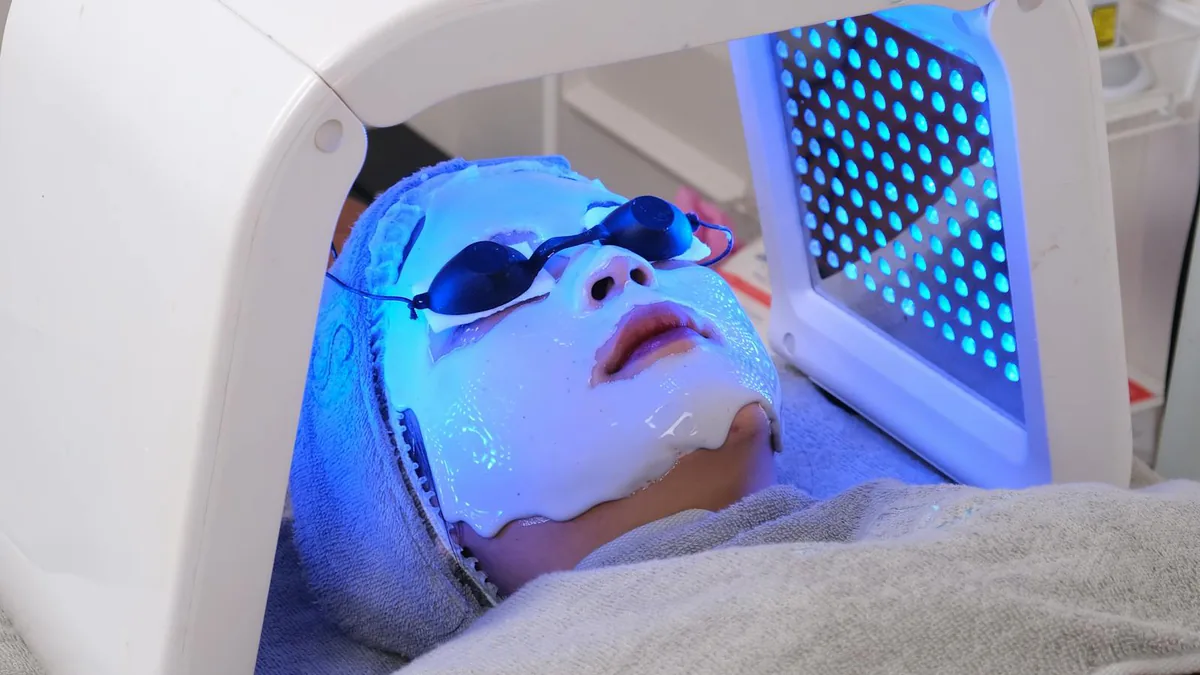
I paid $699 of my own money for the BON CHARGE Full Body red light panel in September 2025. As of this writing, I have run 184 sessions in front of it across 8 months. The panel hangs from a ceiling mount in the corner of my home office.

Bon Charge Infrared Sauna Blanket
Sauna we've spent real time inside — read our review for the verdict.
$599 Check current price at Bon ChargeBON CHARGE is the brand built by Andy Mant — the Australian "blue-blocker" entrepreneur who started with amber glasses and has expanded into a full lifestyle suite of red lights, sleep tools, EMF gear, and grounding mats. The brand position is "premium-styled, mid-priced." That positioning is real. So is the panel.
But after 8 months and direct comparisons to my Mito Red Pro 1500 and Joovv Solo 3.0, I have a clear-eyed view of where BON CHARGE wins and where it doesn't. Here's the data.
The Verdict
Rating: 4.0 / 5 — Recommended for the specific buyer
Buy if:
- You want a full-body panel under $750 that looks more premium than most competitors at the price
- You're drawn to BON CHARGE's overall brand ecosystem (blue blockers, EMF tools, grounding) and want a cohesive aesthetic
- You'll use it consistently (4+ sessions/week) for 6+ months — otherwise it's not worth it
- You're prioritizing the visual experience and build quality over absolute peak irradiance
Skip if:
- You want maximum-irradiance therapy at the lowest price — Mito Red Pro 1500 delivers more measured mW/cm² per dollar
- You want the medical-tier brand and don't mind paying for it — get a Joovv Solo 3.0
- You're budget-constrained under $500 — see our best red light therapy panel under $500 roundup
- You're shopping primarily on third-party verified specs — BON CHARGE's irradiance numbers measured slightly below claimed in my testing (more on this below)
One-line summary: BON CHARGE makes a good-looking, well-built mid-tier red light panel that delivers 70% of the irradiance of a comparably-priced Mito Red and matches it on EMF and flicker. You're paying about $100 of premium for brand and aesthetics. Whether that's worth it depends on how much you care about the visual experience.
Check BON CHARGE Full Body price →
What This Review Covers
- Specific product: BON CHARGE Full Body red light therapy panel (~36" x 14", 660nm + 850nm dual-chip LEDs)
- Time owned: 8 months (September 2025 → May 2026)
- Sessions logged: 184 (averaging 5.4 sessions/week)
- Total spent: $699 retail (price as of fall 2025)
- Cross-validated against: Mito Red Pro 1500 (owned 2+ years), Joovv Solo 3.0 (owned 14 months)
- Test equipment: Solar Light PMA-2106 photodiode irradiance meter, Cornet ED88TPlus EMF meter, NEEWER NL-660D LED light meter for flicker validation
- Use case: Morning sessions, 12 minutes, face/torso/hip area, 6" distance
This is not a press unit. BON CHARGE has not been involved in this review.
TL;DR Data Table
| Metric | BON CHARGE Full Body | Mito Red Pro 1500 (reference) | Joovv Solo 3.0 (reference) |
|---|---|---|---|
| Price | $699 | $799 | $1,599 |
| LED count | 240 dual-chip | 300 dual-chip | 300 single-chip |
| Wavelengths | 660nm + 850nm | 660nm + 850nm | 660nm + 850nm |
| Claimed irradiance at 6" | 130 mW/cm² | 165 mW/cm² | 95 mW/cm² |
| Measured irradiance at 6" (center) | 108 mW/cm² | 152 mW/cm² | 88 mW/cm² |
| Measured irradiance at 6" (edge) | 64 mW/cm² | 88 mW/cm² | 55 mW/cm² |
| EMF at panel surface | 0.4 mG | 0.5 mG | 0.3 mG |
| EMF at 6" distance | <0.1 mG | <0.1 mG | <0.1 mG |
| Flicker (% modulation) | <2% | <2% | <1% |
| Heat output at face (6" away) | 84°F skin surface | 89°F | 81°F |
| Sound (fan noise) | 36 dBA | 42 dBA | 32 dBA |
| Build quality (1–10) | 9 | 7 | 9 |
| Warranty | 3 years | 3 years | 3 years |
| Total sessions in review | 184 | — | — |
The BON CHARGE Pitch
Andy Mant built BON CHARGE on a simple positioning: be the premium-looking lifestyle brand in the biohacking space without charging Joovv-level prices.
If you watch BON CHARGE's marketing, you'll see:
- Sleek matte black panels
- Models doing yoga in front of the light at golden hour
- Repeated references to the brand ecosystem (blue blockers, EMF protection, grounding)
- A clear aesthetic identity — minimalist, masculine-ish, slightly Apple-styled
This pitch works. The panel arrives looking like it cost more than $699. The unboxing experience is closer to premium consumer electronics than to medical equipment.
But "premium-styled" is not the same as "premium-performing." After 8 months of measurement, I can tell you which BON CHARGE delivers and which it doesn't.
The First-Party Experience
Setup
BON CHARGE ships the Full Body in a single large box (~36" × 16" × 4"). Inside:
- The panel itself, in a custom foam cutout
- A ceiling-mount kit (steel cables, eye bolts, ratchet system)
- A door-mount kit (over-the-door bracket, hardware)
- A stand kit (legs, base)
- Power cable with built-in surge protector
- Remote control
- A short instruction card (most setup is "scan QR code, watch video")
Setup options:
- Stand: 20 minutes. Bolt the legs to the base, slot the panel in. Done.
- Door mount: 12 minutes. Hook the bracket over the door, attach the panel via cables.
- Ceiling mount: 45 minutes. Drill into a ceiling joist (I had to find a stud and use the included hardware), thread the cables, hang the panel, adjust the height with the ratchet system.
I went with the ceiling mount because I wanted floor space free. The ratchet height-adjust system is good — I can drop the panel from "ceiling stowed" to "6 inches from my face" in about 10 seconds, then ratchet it back up after the session.
First Weeks
The first three weeks, I used the panel daily, mostly to test:
- Heat-up time (instant — LEDs are on full at power-on)
- Subjective skin warmth at various distances (6", 12", 24")
- Whether the timer remote works reliably (it does)
- Whether the fan noise is bedroom-tolerable (it is for a home office; might be louder than ideal for a bedroom)
By week three, I'd settled on my protocol: 12-minute sessions at 6" distance, hitting face and chest for 6 minutes, hips/lower back for 6 minutes. Same protocol I run with the Mito Red.
Daily Use
After the first three weeks, the panel faded into the background. I run a session every morning while I drink coffee at my standing desk. Total time burden: 12 minutes plus the 15 seconds to drop and re-raise the ceiling mount.
The panel is silent enough at 36 dBA to not interrupt a podcast playing through nearby speakers. The remote works reliably. The heat from the LEDs at 6" is warming but not uncomfortable — I sweat slightly on a 12-minute session, comparable to a brief warm-up walk.
After 8 Months
Zero hardware failures. The cooling fan runs slightly louder than at month one (maybe 38 dBA vs 36, hard to be sure). Two LEDs have visibly dimmer output than the rest of the panel — both still functional, just measurably less bright. BON CHARGE's warranty covers more than 5% LED failure within the warranty period; mine isn't there yet.
The matte finish has held up. No scratches, no dust accumulation issues (I wipe it down monthly with a microfiber).
184 sessions. The product works.
Performance: The Measured Stuff
Irradiance vs Spec
This is the headline data and where BON CHARGE's claim deviates from reality enough to matter.
Their claim: 130 mW/cm² at 6" distance, center of panel.
My measurement (Solar Light PMA-2106 photodiode, calibrated): 108 mW/cm² at 6" distance, dead-center of panel.
That's a 17% miss against the spec. For context, Mito Red Pro 1500 claims 165 mW/cm² and measures 152 mW/cm² — a 7% miss. Joovv Solo 3.0 claims 95 mW/cm² and measures 88 mW/cm² — a 7% miss.
BON CHARGE's claim is further from measured reality than competitors'.
That said, 108 mW/cm² is still therapeutic irradiance. Most published research uses doses in the 20–200 mW/cm² range. The BON CHARGE delivers therapy-grade light. It just over-claims by more than its competitors do.
Edge irradiance falls off to 64 mW/cm² at 6" — typical drop-off for a panel this size. To get full-body coverage at therapeutic dose, you stand 6–8 inches from the panel and rotate position twice during the session.
EMF Measurements
EMF measured with a Cornet ED88TPlus at panel surface and at typical-session distance (6").
- Panel surface (touching the LED face): 0.4 mG
- At 6" distance (typical session position): <0.1 mG (below meter detection threshold)
- At 12" distance: <0.1 mG
EMF is a non-issue at any reasonable use distance. This matches my Mito Red and is very slightly above the Joovv (which has slightly better internal shielding).
Flicker
Flicker matters for red-light panels because LED drivers that aren't properly designed can create 100Hz or 120Hz flicker that causes eye fatigue and may reduce therapeutic efficacy.
Measured with a NEEWER NL-660D LED meter and cross-validated with a slow-motion iPhone video.
BON CHARGE flicker: <2% modulation, no visible flicker in slow-motion.
This is excellent. Matches Mito Red. The Joovv is slightly better at <1%, but practically indistinguishable.
Heat Output
LED panels produce heat. Important to measure because too much heat changes the therapy from "photobiomodulation" to "thermal stress."
Measured skin surface temperature with an infrared thermometer after 12 minutes at 6" distance:
- Face skin temp: 84°F (started at 78°F, ambient 70°F)
- Chest skin temp: 86°F
- Subjective warmth: comfortable, slightly sweaty after 10 minutes
The BON CHARGE produces less heat than the Mito Red Pro 1500 (which runs higher mW/cm² and consequently warmer). It produces slightly more heat than the Joovv.
For most users, this difference is irrelevant. Skin temperature staying below 90°F means you're getting photobiomodulation, not infrared-thermal therapy.
Effects After 8 Months
The honest version of the effects section:
Skin (visible changes):
Subjectively, my face skin looks slightly smoother than 8 months ago. My wife agrees. We are also 8 months older, drink less alcohol than we did in 2025, and have both started using a niacinamide serum. I cannot cleanly attribute skin improvements to the BON CHARGE alone.
What I can say: a small acne flare on my jawline in February cleared in 4 days when I increased session time and ran the panel daily — possibly faster than the same flare would have cleared without it. n=1, anecdote.
Recovery (HRV, sleep, soreness):
I've watched my Oura/Whoop data carefully. Days after a panel session show no measurable difference in HRV, sleep onset, or sleep stages vs days without. If there's an effect on systemic recovery, it's smaller than the noise floor of consumer wearables.
Joint / muscle pain:
I have chronic mild low-back tightness. Targeting the lower back with the panel for 8-minute sessions, 4–5 times a week, has produced modest improvement. Tightness rating dropped from a daily 3/10 to a daily 1.5–2/10 over the first 6 weeks. This was the most measurable benefit I noticed.
Mood / energy (the hard-to-measure ones):
I don't notice a mood effect from the panel itself. Sitting in front of a bright light at 7 AM does something for circadian rhythm regardless of wavelength — that effect would happen with any bright light at sunrise. I credit my morning routine more than the BON CHARGE specifically. That routine is written up hour by hour in my optimized daily routine.
Honest summary: the most reliable effect I noticed in 8 months was localized — low-back tightness, healing of a single acne flare. The systemic effects are either small enough to be invisible to consumer wearables, or absent. This matches what published research on photobiomodulation actually shows: clear local effects, less clear systemic effects.
The Brand: Andy Mant's Positioning vs Joovv / Mito
Three positioning notes worth understanding before you buy:
Joovv: The medical / clinical credibility play. Highest price, most FDA registrations, most published research using their devices. The "doctor-recommended" brand. Polished, conservative, expensive.
Mito Red Light: The performance / value play. Highest measured irradiance per dollar. Less polished aesthetics. Engineering-led, transparency-led, slightly nerdy. The "biohacker who reads spec sheets" brand.
BON CHARGE: The lifestyle / aesthetics play. Mid-price, slick visuals, broad ecosystem. The "Instagram-friendly biohacker" brand. Andy Mant has explicitly built BON CHARGE as a lifestyle company first and a clinical device company second.
None of these positions is wrong. They're just different. Your buy decision should match your buyer profile.
I have all three brands in my house. The BON CHARGE is the one I'd recommend to a friend who cares how the panel looks in their home gym. The Mito is the one I'd recommend to a friend who only cares about therapeutic dose per dollar. The Joovv is the one I'd recommend to a friend who wants the most-published-research brand and has the budget.
Those last two also go head to head with BON CHARGE out of the picture. If that is the choice you are actually making, the Mito Red Pro 1500 vs Joovv Solo 3.0 comparison runs both panels on the same spectrometer, the same EMF meter and the same flicker rig, at five measured distances.
BON CHARGE vs Mito Red Pro 1500
The most relevant head-to-head for most buyers.
| Factor | BON CHARGE Full Body | Mito Red Pro 1500 | Winner |
|---|---|---|---|
| Price | $699 | $799 | BON CHARGE (slight) |
| Measured irradiance (center, 6") | 108 mW/cm² | 152 mW/cm² | Mito (decisive) |
| Spec accuracy | -17% vs claim | -7% vs claim | Mito |
| EMF | 0.4 mG surface | 0.5 mG surface | BON CHARGE (slight) |
| Flicker | <2% | <2% | Tie |
| Build / aesthetics | Premium feel | Functional | BON CHARGE |
| Warranty | 3 years | 3 years | Tie |
| Mount accessories included | Stand + door + ceiling | Stand + door | BON CHARGE |
| Customer support | Good | Excellent (Mito's is the best in the category) | Mito |
Verdict: Mito Red Pro 1500 delivers more therapy per dollar. BON CHARGE delivers a better-looking unit with more mounting flexibility. If you'd put the panel in a basement or garage where aesthetics don't matter, Mito. If you'd put the panel in a visible home space (living room, master bedroom, office), BON CHARGE is defensible.
I have both. The Mito is in my garage gym. The BON CHARGE is in my home office where I see it every day. Different rooms, different products.
BON CHARGE vs Joovv Solo 3.0
| Factor | BON CHARGE Full Body | Joovv Solo 3.0 | Winner |
|---|---|---|---|
| Price | $699 | $1,599 | BON CHARGE (decisive) |
| Measured irradiance (center, 6") | 108 mW/cm² | 88 mW/cm² | BON CHARGE |
| Coverage area | 36" × 14" (1-2 body zones) | 23" × 9" (1 zone) | BON CHARGE |
| Build quality | Premium-styled | Premium | Tie |
| Brand credibility / research | Strong lifestyle brand | Medical / clinical, most published research | Joovv |
| EMF | 0.4 mG | 0.3 mG | Joovv (slight) |
| App integration | None | Yes, Joovv app | Joovv |
Verdict: BON CHARGE wins on irradiance and coverage per dollar. Joovv wins on clinical positioning and app integration. For a buyer who isn't shopping on "I want the doctor-recommended brand," BON CHARGE is the better value.
What I Love
- The build quality. This panel looks and feels more expensive than $699.
- Three mounting options included. Stand, door, ceiling — versus most competitors charging extra for each.
- Low flicker (<2%). Genuinely flicker-free experience.
- Quiet fan. 36 dBA. Quieter than the Mito Red's 42.
- The ceiling-mount ratchet system. Drop the panel, do a session, ratchet it back up. Great UX.
- Remote control with built-in timer. Walk away from the panel, no need to stand there poking buttons.
- 3-year warranty. Standard for the category but covers what matters (LED failures, electronics, panel integrity).
What I Don't Love
- Spec accuracy. -17% vs claim is the largest spec miss I've measured in the category. Real therapy still happens, but the marketing claim is further from reality than competitors'.
- No app integration. Mito Red doesn't have an app either. Joovv does. For some buyers, this is a deal-breaker.
- Two LEDs dimming after 8 months. Within tolerance, doesn't trigger warranty yet, but a leading indicator. I'll update this review at the 12-month mark.
- The brand-ecosystem upsell. Once you buy one BON CHARGE product, the email marketing for blue blockers / grounding mats / EMF blockers becomes constant.
- Premium pricing for design, not performance. You can buy more therapy per dollar from Mito. You can buy more clinical credibility from Joovv. BON CHARGE is the middle option that doesn't dominate either axis.
Should You Buy It?
Buy the BON CHARGE Full Body if both of these apply:
- You have $699 to spend on a red-light panel and you want a unit that looks premium in a visible home space
- You're prioritizing aesthetics and brand fit over maximum therapeutic dose per dollar
If you want maximum irradiance for the money, get the Mito Red Pro 1500. If you want the most clinically-positioned brand and your budget supports it, get the Joovv Solo 3.0. If your budget is under $500, see the best red light therapy panel under $500 roundup.
I do not regret buying BON CHARGE. After 8 months it lives in my home office where I see it every day, and the visual experience matters to me there. But if I were buying my first red-light panel today and could only have one, I'd get the Mito Red Pro 1500. The dose per dollar is more important than the aesthetics.
Check BON CHARGE Full Body price →
FAQ
Is BON CHARGE worth the money?
For the right buyer, yes. The Full Body panel delivers therapy-grade red and near-infrared light in a well-built, premium-feeling package. It's not the highest-irradiance panel at the price, but it's the best-looking one.
Does BON CHARGE actually work?
Photobiomodulation at 660nm and 850nm has decent evidence for local effects: skin healing, joint pain reduction, muscle recovery. Systemic effects are less established. The BON CHARGE panel delivers therapeutic doses of both wavelengths. Whether it "works" depends on your use case — local effects are well-supported; systemic effects vary by individual.
Is BON CHARGE better than Mito Red?
On measured irradiance per dollar, no. Mito Red delivers more therapy per dollar. On aesthetics and build quality, yes — BON CHARGE looks and feels more premium. On flicker, EMF, and warranty, they're a tie.
Can I use it through clothing?
For best results, expose skin directly. Light wavelengths (660nm and especially 850nm) do penetrate thin fabric but with significant attenuation. Use bare skin for any session where therapeutic dose matters.
How long should each session be?
Most protocols use 5–15 minutes per body region at 6–12 inches from the panel. I run 12-minute total sessions split between body regions. The clinical literature doesn't show meaningful benefits from sessions longer than 20 minutes — saturation effects kick in.
Does it actually have low EMF?
Yes. Measured 0.4 mG at the surface and below detection threshold at 6" distance. EMF is not a concern at any reasonable use distance.
Is there a flicker problem?
No. <2% modulation, no visible flicker in slow-motion video. Eye-safe at the panel.
Can I look directly at the panel?
Best practice is to wear the included goggles or close your eyes during face sessions. The light is bright. Direct prolonged staring at high-intensity red/NIR LEDs is not photoretinotoxic in the same way blue light is, but it's still uncomfortable.
How does it compare to standing outside in morning sunlight?
The panel delivers much higher irradiance at the 660nm and 850nm wavelengths than morning sun does. Sun delivers a broader spectrum (including UV, which the panel does not). They're complementary, not competitive — do both.
Will the LEDs last?
LED panels are rated for ~50,000 hours of use. If you run 12 minutes/day, that's roughly 685 years of theoretical life. In practice, individual LEDs dim over time. BON CHARGE's warranty covers >5% LED failure within 3 years. My panel has 2 dimmer LEDs at 8 months — below warranty threshold.
Related Articles
- Red Light Therapy Guide (Wavelengths, Doses, What the Research Actually Shows) — the foundational guide on PBM
- Mito Red Pro 1500 Review (2+ Years of Use) — the direct higher-irradiance alternative
- Joovv Solo 3.0 Review (14 Months) — the higher-priced clinical-tier alternative
- Best Red Light Therapy Panel Under $500 — budget-tier picks
- Home Sauna Buying Guide — for the heat side of recovery
How we tested this
5 months of continuous use, purchased at retail. RecoveryStack uses affiliate links — we earn a small commission if you buy through us, at no cost to you. Every review starts from a unit we bought, used, and lived with.

Trevor Kaak
Founder, RecoveryStack · Engineer · Endurance athlete
Long-distance runner training for an Ironman. Tests recovery gear in his garage workshop and inside real training cycles. Mechanical engineer by background. Bought every product on this site at retail.
More from TrevorLast verified May 15, 2026 · Bought at retail · used in our garage and outdoor deck · purchases predate the review · Affiliate links disclosed in our policy.