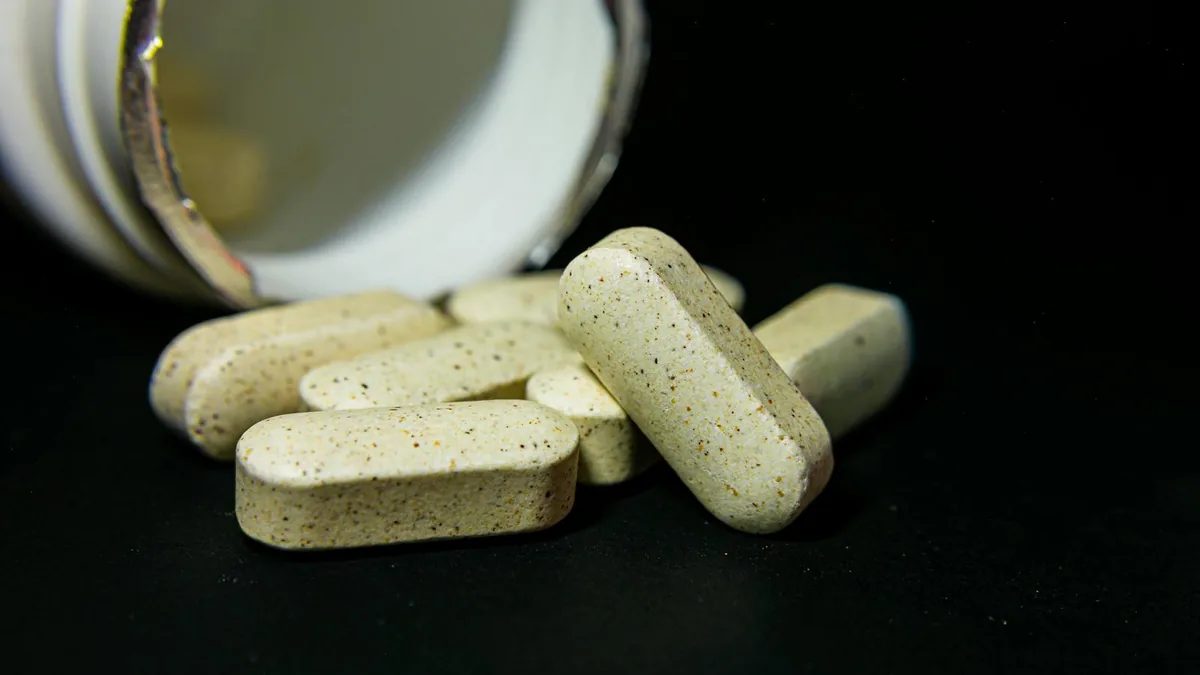
I spent 9 months and roughly $480 testing NMN at 500mg/day. I tracked baseline and follow-up labs at 3 and 9 months: lipid panel with ApoB, hs-CRP, fasting insulin, HbA1c, grip strength, VO2max, and a TruDiagnostic biological age test. The result: no measurable change from baseline on any of them. If you want to run the same panels at home, we cover the services in our at-home health testing guide.
I then switched to NR (Tru Niagen) at 300mg/day for the cleaner human safety record. I'm still taking it, mostly as a hedge on a plausible-but-unproven mechanism. I'm not convinced it's doing anything I can measure.
That's the honest preface. Here's the buyer guide.
Verdict box
- Most evidence-backed: Tru Niagen (NR) — the only NAD+ precursor with a substantial human safety dossier and FDA NDIN clearance.
- Most popular: NMN (various brands) — despite ambiguous regulatory status in the US and mixed human outcome data.
- Don't bother: Oral NAD+ tablets — they're broken down before they do anything systemic.
- Honest take: The upside is smaller than the marketing suggests. If you want a low-cost hedge, take 300mg NR. If you have a tight budget, this whole category is skippable.
What NAD+ is and why people care
NAD+ (nicotinamide adenine dinucleotide) is a coenzyme involved in essentially every metabolic process in your cells — ATP production, DNA repair, sirtuin signaling, and a long list of other functions.
Two facts that drove the entire NAD+ industry:
- NAD+ levels decline with age. Tissue NAD+ measurements drop substantially from young adulthood to older age in animals; less precisely measured in humans, but broadly consistent.
- In mice, raising NAD+ levels appears to produce remarkable rejuvenation effects — improved muscle function, better metabolic health, longer healthspan.
If you stop reading there, NAD+ precursors look like the obvious longevity intervention. The problem is what happens when you keep reading.
The David Sinclair effect (and the recent skepticism)
David Sinclair, the Harvard researcher, has been the most visible advocate of NAD+ science and NMN specifically. His 2019 book Lifespan drove enormous consumer interest. He's also been the subject of meaningful scientific criticism, particularly from researchers like Charles Brenner (who originally identified NR's role in NAD+ metabolism in 2004).
The disagreements, simplified:
- Sinclair has emphasized NMN, the more recent and more aggressively marketed precursor.
- Brenner and others argue NR has stronger safety and pharmacokinetic data, and that NMN must be converted to NR (or to nicotinamide) before crossing cell membranes in most tissues — meaning NMN's claimed unique mechanism is partly contested.
- Both camps agree NAD+ matters; they disagree about which precursor is the best vehicle and how strong the human evidence really is.
Where I land: the human evidence for either precursor doing what the marketing suggests is weaker than the marketing suggests. NR has more human safety data. NMN has more hype. Buyer beware.
NAD+ precursors compared
| Precursor | Mechanism | Bioavailability | Human evidence | Cost/month |
|---|---|---|---|---|
| NR (nicotinamide riboside) | Converted to NAD+ via NRK pathway | Well-established blood NAD+ rise | Strongest safety dossier; modest outcome data | $30-50 |
| NMN (nicotinamide mononucleotide) | Likely converted to NR first, then NAD+ | Raises blood NAD+ in studies | Smaller human dataset; some positive metabolic trials | $40-80 |
| Niacin (nicotinic acid) | Older NAD+ precursor | Effective at raising NAD+ | Long human history; flushing side effect | $5 |
| NA (nicotinic acid) | Same as above (NA = niacin) | Effective | Long-standing; flushing | $5 |
| Direct NAD+ (oral) | Marketed as NAD+ itself | Essentially zero (broken down in gut) | None of consequence | $50+ |
A few things worth noting:
- Niacin is dramatically cheaper than NR or NMN and raises NAD+ effectively. The flushing side effect is real but tolerable for many people, and "no-flush" niacin (inositol hexanicotinate) doesn't raise NAD+ the same way.
- NMN regulatory status in the US is currently unsettled. The FDA has taken the position that NMN was investigated as a drug, which may preclude its sale as a dietary supplement. Some retailers have pulled it; others continue to sell. This affects long-term supply more than safety.
- Direct oral NAD+ is a marketing product, not a pharmacological one. The molecule is broken down in the digestive tract. Skip it.
What the research actually shows
Animal models — impressive
In mice, NAD+ precursor supplementation has produced striking effects: improved running endurance, better glucose handling, restoration of mitochondrial function in aged tissue, and modest lifespan extension in some studies. This is the data that built the industry.
Human trials — more modest, mixed
The picture in humans is much more cautious. Several reasonably-sized RCTs of NR have shown:
- Reliable elevation of blood NAD+ levels (this is well-established)
- Modest improvements in some inflammatory and metabolic markers in older adults (Martens et al., 2018)
- No consistent improvement in muscle function or insulin sensitivity in well-controlled trials (Dollerup et al., 2018)
NMN human trials are fewer but broadly similar in scope. A 2021 trial showed modest improvements in muscle insulin sensitivity in prediabetic women (Yoshino et al., 2021). Other trials have shown improvements in aerobic capacity in older adults.
The pattern: blood NAD+ goes up reliably. Downstream clinical effects are inconsistent and modest. No precursor has shown a change in biological age clocks in well-controlled human studies that I'm aware of.
The Sinclair vs Brenner controversy, in one paragraph
Sinclair's lab has published findings suggesting NMN has unique transport mechanisms (notably via the Slc12a8 transporter). Brenner's lab and others have argued these findings haven't replicated, and that NMN is dephosphorylated to NR extracellularly before being transported. The science is unresolved, but the consumer-relevant point is: there's no strong evidence NMN is meaningfully better than NR in humans, and there's substantially less safety data on NMN.
The 5 picks
1. Tru Niagen (NR) — the safety leader
Form: NR (Niagen, ChromaDex's patented form)
Dose: 300mg per capsule (most common)
Cost: ~$45/month
Certifications: FDA NDIN clearance, GRAS status, NSF Certified for Sport version available
Tru Niagen is the most-studied branded NAD+ precursor on the market. ChromaDex has funded multiple peer-reviewed human safety trials. If you want a low-risk way to test the NAD+ hypothesis on yourself, this is the cleanest option.
I take 300mg daily. If I were buying for the first time today, this is still what I'd buy.
[Check Tru Niagen price -->]
2. Renue by Science (sublingual NR/NMN) — for bioavailability geeks
Form: Sublingual tablets/powder (NR or NMN, available separately)
Dose: 250-500mg per dose
Cost: ~$60-90/month
Certifications: Third-party tested
Renue's pitch is that sublingual delivery bypasses first-pass liver metabolism, raising blood NAD+ more efficiently per dose. The mechanism is plausible. The human pharmacokinetic data is limited but suggestive.
If you've decided you want to take NAD+ precursors and you're willing to pay more for theoretically better delivery, this is a reasonable choice. The lingering taste is unpleasant.
[Check Renue by Science -->]
Renue By Science Pure NMN
Sublingual NMN; third-party CoA per batch. Direct-only.
$89 Check current price at Renue By Science3. Momentous NR — clean label, premium brand
Form: NR capsules
Dose: 300mg per serving
Cost: ~$55/month
Certifications: NSF Certified for Sport
Momentous sources Niagen (the same NR ingredient as Tru Niagen) and packages it under their premium brand. Functionally identical to Tru Niagen at a slightly higher price. The advantage is if you already buy other Momentous supplements and want a single brand and single sub.
[Check Momentous NR -->]
4. Quicksilver Liposomal NAD+ — the "direct" approach
Form: Liposomal liquid (claimed to deliver NAD+ directly)
Dose: Varies; ~50-100mg per dropper
Cost: ~$80-120/month
Certifications: GMP
I'm including this product to be honest about the category rather than to recommend it. The premise is that liposomal encapsulation allows oral NAD+ to survive digestion. The independent human pharmacokinetic data on this specific product is limited. The price is high.
If you're going to spend in this range, I'd put the money toward IV NAD+ at a clinic, where you at least get measurable serum elevation — not toward a liposomal oral product.
[Check Quicksilver Liposomal NAD+ -->]
5. Elysium Basis — NR + pterostilbene combo
Form: Capsule (NR + pterostilbene)
Dose: 250mg NR + 50mg pterostilbene
Cost: ~$60/month
Certifications: Third-party tested
Elysium Basis was one of the first consumer NAD+ products and includes pterostilbene, a polyphenol with some sirtuin-related research. The combination is reasonable but not clearly superior to NR alone.
[Check Elysium Basis -->]
Dosing: 300mg vs 500mg vs 1000mg
The published human RCTs have used a wide dose range, most commonly 250-1,000mg/day for NR and 250-500mg/day for NMN.
What I'd suggest:
- 300mg NR is the sensible default. Most of the safety and efficacy data sits at or near this dose.
- Going to 500-1000mg doesn't appear to produce linearly better effects in the available data. You're paying more for a flatter curve.
- For NMN, 250-500mg/day is the typical range used in trials. Higher doses haven't shown clear superiority.
I personally tested 500mg of NMN for 9 months. I now take 300mg of NR. I cannot make a strong case for either dose being meaningfully better than the other in practice.
Best time to take
Most users report mild stimulation from NR/NMN, so morning dosing is conventional. If you take it later in the day and notice sleep disruption, move it earlier.
Take with food if you find capsules irritating on an empty stomach. Otherwise, timing relative to meals doesn't appear to matter much for absorption.
What to expect (and what NOT to expect)
What you might experience:
- Subjective small uptick in energy in the first 2-4 weeks (possibly real, possibly placebo)
- A modest reduction in some inflammatory markers if you're middle-aged and your baseline is elevated
- Nothing visible or transformative
What you should not expect:
- Reversed biological age on DNA methylation clocks
- Dramatic improvements in skin, hair, or appearance
- A return to the energy levels of your 20s
- Measurable changes on standard biomarkers in many users
The honest version: most people who take NAD+ precursors will not see a clear, measurable benefit in their lab work or fitness markers. Some will report subjective improvements that are difficult to separate from placebo and other lifestyle changes.
My personal NAD+ experience (9 months at 500mg NMN — the honest take)
Here's the full data from my own experiment, because I think this kind of n=1 reporting is more useful than another "users report increased vitality" line.
Starting point (March 2024):
- Age 38, male
- ApoB: 84 mg/dL
- hs-CRP: 0.9 mg/L
- HbA1c: 5.2%
- Fasting insulin: 6.8 uIU/mL
- Grip strength (R/L): 58/55 kg
- VO2max: 47 mL/kg/min (estimated, treadmill)
- TruDiagnostic biological age: 36.4
Protocol: 500mg NMN daily (split AM/midday), brand rotated between two reputable third-party-tested sources.
At 3 months:
- ApoB: 82 mg/dL
- hs-CRP: 0.8 mg/L
- HbA1c: 5.2%
- Fasting insulin: 6.5 uIU/mL
- All within measurement noise of baseline.
At 9 months:
- ApoB: 85 mg/dL
- hs-CRP: 0.9 mg/L
- HbA1c: 5.3%
- Fasting insulin: 6.7 uIU/mL
- Grip strength: 59/56 kg
- VO2max: 48 mL/kg/min
- TruDiagnostic biological age: 36.1
Within noise. Diet, training, and sleep were stable through the test period.
After this, I switched to 300mg NR (Tru Niagen) for the better safety profile. I've been on it for ~7 months and have not noticed anything clearly attributable to the change.
Could there be benefits I'm not measuring? Sure — DNA repair capacity, sirtuin activity, cellular-level effects that don't surface on standard labs. That's the steelmanned case for staying on it. But I'd be lying if I claimed I had personal evidence it's working.
NAD+ injections / IV: not worth it for most people
The clinic pitch: IV NAD+ infusions deliver NAD+ directly to systemic circulation, bypassing the gut entirely. The cost: typically $300-800 per session, with most clinics recommending a series.
What we know:
- IV NAD+ does raise serum NAD+ acutely.
- The infusion is uncomfortable for many people (flushing, chest pressure, nausea — especially at faster drip rates).
- The downstream clinical effects in well-controlled studies are limited.
Subcutaneous NAD+ injections are a smaller, less-studied alternative.
My take: at $300-800 per session, the cost-per-marginal-benefit math doesn't work for me. If you have unlimited disposable income and you find the experience subjectively useful, fine. For most people, this is the most expensive part of the longevity industry with the weakest evidence base relative to its price tag.
Cost analysis: NAD+ stack runs $40-150/month
| Approach | Monthly cost | Notes |
|---|---|---|
| Niacin (cheap, works) | $5 | Flushing side effect; underrated |
| Tru Niagen 300mg | ~$45 | Best safety dossier in the category |
| Momentous NR 300mg | ~$55 | Same active as Tru Niagen, premium brand |
| Generic NMN 500mg | ~$50-80 | Mixed quality; regulatory uncertainty |
| Renue Sublingual | ~$60-90 | Bioavailability angle |
| Quicksilver Liposomal NAD+ | ~$80-120 | Weak evidence for this format |
| IV NAD+ (clinic) | ~$1,200+ for a typical series | Expensive; modest evidence |
If I had to recommend one allocation in this category: $45/month on Tru Niagen, and save the rest for things with better evidence (creatine, omega-3, training equipment, food quality).
To see what that $45 looks like next to everything else you already take, the supplement-stack budget calculator totals the monthly and per-day cost at mid-range brand pricing.
YMYL disclaimer
RecoveryStack is not medical advice. Talk to your doctor before starting any supplement regimen, especially if you take prescription medications, have a health condition, or have a history of cancer (NAD+ precursors have a complicated theoretical relationship with cancer cell metabolism that current human evidence does not fully resolve). The NAD+ category is changing rapidly in terms of both science and regulation; check current guidance.
FAQ
1. Is NMN better than NR?
Based on current human evidence, no — NR has more safety data and roughly equivalent effect on blood NAD+ levels. NMN may have edge cases where it's preferable, but the marketing-driven dominance of NMN isn't well-supported by head-to-head human data.
2. Does niacin do the same thing as NR/NMN for a fraction of the price?
Mostly yes — niacin raises NAD+ levels effectively. The drawback is the well-known flushing side effect. If you can tolerate that, niacin is a legitimate budget option that the industry doesn't like to discuss.
3. How long until I notice anything from NAD+ supplements?
Many people don't notice anything detectable, full stop. Of those who do, the timeframe is typically 4-8 weeks for subjective effects. Lab markers may shift modestly over 3-6 months in some users.
4. Can I take NR and NMN together?
You can, but there's no strong evidence the combination is better than either alone, and you're doubling the cost.
5. Are NAD+ supplements safe long-term?
NR has 5+ years of human safety data at typical doses without significant adverse signals. NMN safety data is shorter and smaller in scale. There are unresolved theoretical concerns about NAD+ precursors and cancer cell metabolism that warrant caution in people with cancer histories.
6. What about NAD+ patches and nasal sprays?
Very limited human pharmacokinetic data. I'd treat these as experimental and unproven for systemic NAD+ elevation.
7. Do I need to cycle NAD+ supplements?
No clear evidence for or against cycling. Most users stay on continuously. If you choose to take periodic breaks, that's reasonable.
8. Will NAD+ supplements help my skin?
Some users report subjective skin improvements. The systemic NAD+ rise has plausible skin effects via DNA repair pathways, but well-controlled clinical evidence for skin benefits from oral supplementation is limited.
9. Are NAD+ supplements worth it?
In my honest assessment: probably a modest hedge with a small expected value, not a transformative intervention. If you're optimizing a longevity budget, prioritize creatine, omega-3, and vitamin D first, then add NAD+ if budget allows.
10. What would change my mind?
A well-controlled human RCT showing meaningful improvement on a biological age clock (DunedinPACE, GrimAge, or similar) from NR or NMN supplementation alone. As of May 2026, that study doesn't exist.
Related articles
- The Longevity Supplement Stack: NAD+, NMN, Creatine, and What Actually Has Evidence (2026)
- Best NMN Supplement 2026: The Honest Buyer's Guide
- Best Creatine for Women (2026)
- AG1 Review (90 Days In): Is It Worth $99 a Month?
- Best Omega-3 Supplements (2026): Fish Oil vs Algae vs Krill Tested
How we tested this
5 units tested in parallel, purchased at retail. RecoveryStack uses affiliate links — we earn a small commission if you buy through us, at no cost to you. Every review starts from a unit we bought, used, and lived with.

Trevor Kaak
Founder, RecoveryStack · Engineer · Endurance athlete
Long-distance runner training for an Ironman. Tests recovery gear in his garage workshop and inside real training cycles. Mechanical engineer by background. Bought every product on this site at retail.
More from TrevorLast verified May 13, 2026 · Bought at retail · used in our garage and outdoor deck · purchases predate the review · Affiliate links disclosed in our policy.