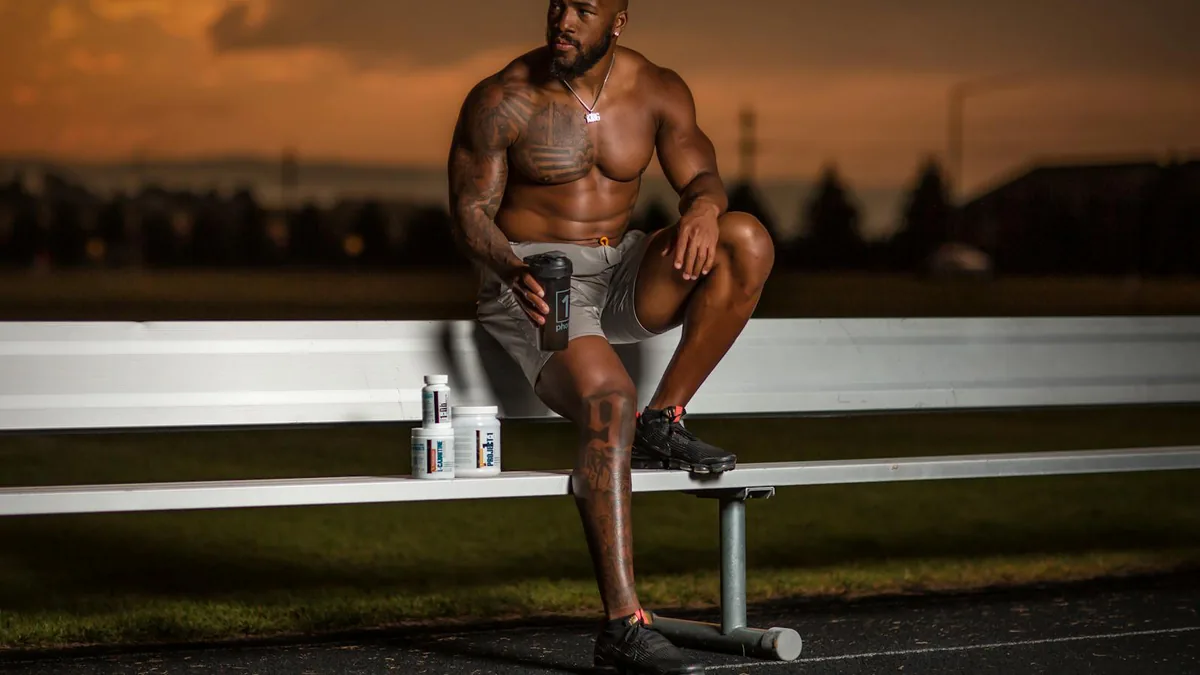
By Trevor Kaak — Updated May 15, 2026
I'm not a pro. I'm a mid-30s former collegiate athlete who still trains hard six days a week, who's spent the last four years testing every recovery intervention worth testing, and who's logged most of it through two recovery wearables and quarterly blood panels.
This is the recovery stack I'd hand to any serious athlete — the one I actually use, with the timing rules, the gear, the cost, and the parts where the science says something different than the YouTube algorithm says.
The center of gravity here is simple: sleep is the floor, and everything else is a multiplier on it. Get the floor right before you optimize the multipliers.
TL;DR — The Verdict Box
- The three most-leveraged interventions for athletes, in order: Sleep (8+ hours, consistent timing, cool dark room), zone 2 + strength balance (training, not technically "recovery" but it's the system you're recovering for), and protein (1.6–2.2g/kg/day).
- When to use cold post-workout: Endurance work, in-season game days, between bouts in tournaments. When NOT to: Within 4 hours of a hypertrophy-focused lift. The cold-and-lifting story is more nuanced than most people make it.
- Sleep is the floor: No amount of contrast therapy compensates for chronic 6-hour nights. If your sleep is broken, fix that before buying gear.
- Sauna is the most underrated tool for endurance athletes: Heat acclimation = plasma volume expansion = a measurable performance edge.
- The HRV trap: A wearable is a tool, not a god. Trends over weeks beat any single morning's number.
1. Sleep Is the Foundation
If you take only one thing from this article, take this: the most performance-enhancing legal substance on Earth is the eighth hour of sleep.
Stanford's basketball study (Mah et al., 2011) extended players' sleep from ~6.5 hours to 10 hours for 5–7 weeks. Sprint times dropped. Free throw accuracy went up 9%. Three-point accuracy went up 9.2%. Subjective fatigue dropped. They didn't change training. They just slept more.
You don't need 10 hours. You probably need 8. Most athletes get 6.5 and tell themselves it's fine.
How to fix sleep, in order
- Consistent wake time, 7 days a week. Weekend drift is the biggest underrated saboteur.
- Cool, dark, quiet room. 62–68°F. Blackout shades. Earplugs if needed.
- No screens 60 minutes before bed. This is the one most athletes refuse to do. Try it for two weeks and look at your data.
- No caffeine after 2pm. Half-life is 5–6 hours. Math doesn't care about your "I'm not sensitive."
- Track it. Then trust the trend, not the night.
The wearables that actually help
I cover this in depth in the recovery wearable guide. The short version: athletes benefit from a wearable that tracks both sleep stages and HRV trends with research-grade reliability.
The two I'd recommend:
- Oura Ring 4: Best for sleep tracking. Smaller learning curve. Better at-rest accuracy. Good for athletes who want to focus on the recovery side.
- Whoop 5: Best for training load and strain quantification. More opinionated about when to train hard vs back off. Better for athletes who want a coaching layer.
Oura Ring Generation 4
Best for ring form factor. Subscription required ($5.99/mo).
$349 Check current price at Oura
Whoop 5.0
Membership bundles hardware. Whoop is on Impact.com — fill impact_program_id once approved.
$239 Check current price at WhoopHead-to-head in Oura vs Whoop. And the Ultrahuman Ring Air review covers the no-subscription alternative if Oura's recurring fee bothers you.
The Eight Sleep Pod 4: the most expensive sleep upgrade that actually delivers
I bought the Eight Sleep Pod 4 skeptically. It's earned its place. Active cooling (and warming, but I run mine cold) keeps the bed surface in the 60–65°F range all night, which puts you deeper into the deep-sleep window earlier in the night.
My average deep sleep increased from 1h12m to 1h31m in the first two months. HRV trend went up over the same period. Not free, but if sleep is the floor, this is the cheapest way to raise it.
2. The Hypertrophy Caveat: Cold and Lifting
Here's where most "cold plunge for recovery" content goes wrong.
Plunge Cold Tub Pro
Pillar premium cold plunge. 14-month first-party experience. Trevor's daily-driver.
$4,990 Check current price at PlungeThere's a well-replicated literature now — Roberts et al. 2015, Fyfe et al. 2019, Allan et al. 2022 — showing that cold-water immersion within 4 hours of a hypertrophy-focused resistance training session blunts muscle protein synthesis and reduces long-term hypertrophy gains.
The proposed mechanism: cold suppresses the post-exercise inflammatory cascade that drives muscle remodeling. Some of that inflammation is the signal, not the noise.
What this means in practice
| You're training for | Cold post-workout? |
|---|---|
| Hypertrophy / muscle gain | No, wait 4–6+ hours |
| Strength (low-rep, neural) | Probably fine |
| Endurance (running, cycling) | Yes, often helpful |
| In-season team sport | Yes, especially between sessions |
| Tournament weekend | Yes |
| Recovery day | Yes |
Full timing nuance — including the dose-response, the "cold first thing in the morning before training" question, and the contrast therapy version — is in the cold plunge protocols article.
The headline: don't cold plunge immediately after lifting if you're trying to build muscle. Plunge in the morning, or post-cardio, or 6+ hours after the lift.
3. When Cold Actually Helps Recovery
Cold does work — it just doesn't work for everything.
The cases where the evidence is strongest:
Between bouts in tournaments
You have a game in 4 hours. You played 90 minutes this morning. You need to reduce perceived fatigue and inflammation fast. Cold immersion 10–15 minutes at 50–59°F is well-validated for restoring perceived recovery and short-term performance.
Endurance training blocks
High-volume running, cycling, swimming. The hypertrophy concern doesn't apply (you're not trying to grow muscle), and cold reliably reduces DOMS and accelerates perceived recovery.
Heat-stressed conditions
Played in 95°F humidity? Cold immersion is the fastest core-temperature drop available. Used by the military and the NCAA for exertional heat illness.
Mood and motivation
Less performance-related but real: cold exposure spikes norepinephrine (~530% increase, Šrámek et al. 2000) and dopamine (~250%) and the elevation can last 2–4 hours. If you train hard, the mental edge alone is worth it.
The protocol I run
- Morning: 3 minutes at 48°F, daily-ish.
- Endurance training days: Optional second exposure 30 min post-session, 8–10 minutes at 55°F.
- Hypertrophy days: No cold within 6 hours of the lift.
- Tournament days: Between matches if I have 2+ hours, 10 min at 55°F.
Gear: Plunge Cold Tub in the garage. Budget option: see the DIY chest freezer cold plunge build or Ice Barrel review. Full buyer's matrix in Plunge vs Ice Barrel and the cold plunge guide.
4. Sauna for Endurance Athletes (the Finnish Data)
Here's the most underrated tool for endurance athletes.
Scoon et al. (2007) had distance runners do 30 minutes of post-workout sauna, 4× a week, for 3 weeks. Run-time-to-exhaustion at the same workload increased 32%. Plasma volume expanded 7.1%. Red cell volume increased ~3%.
Translation: heat acclimation expands your plasma volume, which lowers cardiovascular strain at submaximal efforts. It's a poor man's altitude training.
For longevity context, the Finnish Kuopio cohort data (Laukkanen et al.) shows 4–7 sauna sessions per week associated with ~40% reduction in all-cause mortality vs 1 session. The dose-response is real.
The protocol that's worked for me
- Frequency: 4–5 sessions/week
- Duration: 20–30 minutes per session
- Temperature: 80°C / 176°F (my infrared) or 85–90°C (traditional)
- Timing: Late afternoon, post-training day works best; pre-training the day before a key session if I'm trying to drive heat acclimation
- Hydration: 16 oz water with electrolytes (LMNT) before, another 16 oz after
I use a Sun Home Solstice infrared sauna. If you want the rolls-royce, see Sunlighten mPulse review. For travel/apartment use, the Higher Dose sauna blanket review covers the substitute (it's not as good, but it's portable).
Full buyer's guide in the home sauna guide.
5. The Contrast Therapy Protocol
Sauna → cold → sauna → cold. The pendulum.
The acute physiology is fascinating: alternating heat-induced vasodilation and cold-induced vasoconstriction creates a "pumping" effect on peripheral circulation. Subjectively, contrast therapy feels qualitatively different from either modality alone — calmer than cold alone, more energizing than sauna alone.
My protocol
| Round | Modality | Duration |
|---|---|---|
| 1 | Sauna | 15 min |
| 2 | Cold plunge | 2 min |
| 3 | Sauna | 12 min |
| 4 | Cold plunge | 2 min |
| 5 | Sauna | 10 min |
| 6 | Cold plunge | 1 min |
| End | Air dry, hydrate | — |
Run this 1–2× a week, never within 4 hours of a hypertrophy lift. Full version with the rationale and variations in the sauna + cold plunge protocol.
6. Light Therapy for Muscle Recovery
The red light therapy literature for athletes is more interesting than I expected when I started looking into it.
The mechanism (photobiomodulation, ~660nm and ~850nm) appears to enhance mitochondrial output via cytochrome c oxidase activation. The athletic-performance studies (Ferraresi et al., Leal-Junior et al.) show small-but-real reductions in DOMS, faster recovery between sessions, and modest improvements in time-to-exhaustion.
It's not a magic bullet — the effect size in well-trained athletes is smaller than the gym-bro headlines suggest. But it's also not nothing, and unlike cold and heat, it has effectively zero physiological cost.
My usage
- Post-training: 10 minutes at ~6 inches from skin, full body if possible, 660nm + 850nm
- Frequency: 5–6×/week
- Panel: Mito Red Pro 1500
If you're shopping: the red light therapy guide is the starting point. Comparison reviews: Joovv Solo 3, BON CHARGE, and the best panel under $500 for budget options.
7. Supplements With Actual Sports Evidence
The supplement industry sells a lot of garbage. Three things have rigorous evidence for athletes:
Creatine monohydrate (5g/day)
Most-studied performance supplement in history. Improves strength, power output, lean mass. Newer literature also points to cognitive benefits and sleep-deprivation resilience. For women specifically, see best creatine for women — the dosing and benefits look slightly different than the male-dominated literature suggests.
Whey protein (or any complete protein source) to meet daily protein target
Not magic — just easy. 1.6–2.2g/kg/day is the range that maximizes muscle protein synthesis. Hitting that without a shake is hard for many people. If you want that range turned into a number for your own body weight and training load, the daily-protein calculator runs the Phillips meta-analysis defaults.
Beta-alanine (3–6g/day, split doses)
Reliably extends performance in efforts lasting 1–4 minutes (rowing 2k, 800m, repeated 400s). The paresthesia ("tingles") is harmless. Effect size is small but consistent.
Maybe useful
- Caffeine: 3–6 mg/kg pre-event. Well-validated. I use coffee.
- Sodium bicarbonate: For high-lactate efforts. Tolerability is the issue.
- Tart cherry juice: Modest evidence for DOMS reduction.
The basics I run year-round
See the longevity supplement stack for the daily list. Athlete-specific additions on top:
- Creatine, 5g
- Whey protein as needed to hit daily target
- Electrolytes (LMNT) on training days
- Omega-3 (~2g EPA+DHA)
- Vitamin D3 (5,000 IU, dosed to blood levels)
Skip: pre-workouts with proprietary blends, BCAAs (if you eat protein, useless), most "recovery" branded supplements, NMN/NR for athletic performance specifically (see best NAD supplement).
8. HRV-Guided Training (Read Your Wearable Correctly)
This is where most athletes get it wrong: they look at the morning HRV number and panic.
The right way to use HRV is to compare a rolling 7-day average to a 60-day baseline. A single low morning doesn't mean back off. A 7-day average that's 20%+ below baseline does. We unpack that baseline logic and the trend patterns worth acting on in HRV explained. If you want a sanity check on one morning's number before you change anything, our HRV interpreter places a single reading against your age and resting heart rate, and it lands where this section does: the deviation from your own baseline carries the signal, not the comparison to everyone else's.
What I do
- Morning HRV in target range vs baseline: Train as planned.
- One bad night, rolling average still normal: Train as planned, maybe trim volume 10%.
- Two-week trend declining: Cut training volume 20–30%, more sleep, more food, look at life stress.
- HRV crashes paired with elevated RHR: Probably getting sick. Easy days, no key workouts.
Full breakdown in the recovery wearable guide. The thing every wearable company under-explains: the number is downstream of your life, not the other way around. Sleep more, drink less, eat enough, and HRV climbs without you optimizing the wearable directly.
9. Testing for Athletes (What Panels Matter)
Most "athlete blood panels" are over-priced and under-useful. Here's what actually matters.
The biomarkers I track quarterly
| Marker | Why |
|---|---|
| Ferritin | Low iron tanks endurance performance, common in athletes (esp. female endurance) |
| TSH, Free T3, Free T4 | Overtraining suppresses thyroid output |
| Total + free testosterone | Overtraining and underfueling tank testosterone |
| Cortisol (AM) | Chronic stress / overreach signal |
| hs-CRP | Systemic inflammation |
| Vitamin D | Performance, immunity, bone |
| ApoB | Cardiovascular risk (matters more after 35) |
| Fasting insulin + HbA1c | Metabolic flexibility |
| Omega-3 index | Inflammation balance |
I use Function Health for the breadth (100+ markers quarterly for $499/yr). InsideTracker is the more athlete-targeted option with sport-specific recommendations.
Full breakdown in the at-home health testing guide. For metabolic flexibility specifically, two weeks of CGM data per quarter is worth more than another blood marker — see best CGM for non-diabetics.
10. The Full Daily / Weekly Recovery Template
Numbers, not vibes.
Daily
| Time | Action | Dose |
|---|---|---|
| 6:00 am | Cold plunge | 3 min @ 48°F |
| 6:15 am | Morning sunlight | 10 min |
| 6:30 am | Training (alternating) | 60 min |
| 7:30 am | Protein meal | 40–50g protein |
| 12:30 pm | Lunch | 40g protein |
| 5:00 pm | Sauna | 20 min @ 80°C |
| 5:30 pm | Dinner | 40–60g protein |
| 8:00 pm | Wind-down + magnesium | 400 mg glycinate |
| 9:30 pm | Sleep | 8 hr opportunity |
Weekly (training-paired)
| Day | Training | Recovery additions |
|---|---|---|
| Mon | Strength (lower) | Sauna PM only; no cold post-lift |
| Tue | Zone 2 (60 min) | Cold immersion post-session OK; sauna PM |
| Wed | Strength (upper) | Sauna PM; cold morning only |
| Thu | Zone 2 + VO2 (4×4) | Cold post; sauna PM; red light PM |
| Fri | Strength (full body) | Sauna PM; contrast 1×/wk |
| Sat | Long zone 2 (90+ min) | Cold post-session; sauna PM; massage every 2 weeks |
| Sun | Walk + mobility | Optional contrast therapy; full sleep priority |
11. By Sport
Endurance athletes (running, cycling, swimming, triathlon)
- Highest leverage: Sauna (heat acclimation), sleep, fueling, iron status.
- Cold: Yes, post-workout and between bouts. Helpful for DOMS.
- Watch: Underfueling. Iron deficiency. Sleep displacement from early training.
Strength athletes (powerlifting, bodybuilding, weightlifting)
- Highest leverage: Sleep, protein, sleep, recovery between sessions.
- Cold: Be careful. Not within 4–6 hours of hypertrophy work. Morning cold is fine.
- Watch: The "more is better" trap. CNS recovery is real. Joint inflammation management matters.
Mixed / team sport / CrossFit / Hyrox
- Highest leverage: Sleep, contrast therapy, in-season recovery between games/sessions.
- Cold: Generally helpful, especially in-season.
- Watch: Variable training stress is harder to read with HRV. Trust the trend, not the day.
Combat sports
- Highest leverage: Sleep, weight management without underfueling, contrast therapy.
- Cold: Yes, post-spar. Watch for chronic suppression of adaptation in conditioning blocks.
- Watch: Concussion history changes the whole recovery model. Add cognitive recovery (NSDR, screen time limits, no late-night cognitive load).
12. Common Athlete Recovery Mistakes
After watching dozens of training partners try to build a recovery practice:
- Cold-plunging right after lifting. The most common mistake. Wait 4–6 hours.
- Underfueling. "Eating clean" is not a synonym for "eating enough." Most athletes I know are 200–400 cal short of need.
- Treating sleep as flexible. Sleep is non-negotiable. Move literally anything else first.
- Chasing HRV numbers. Trends, not days.
- Skipping mobility/walking on rest days. Active recovery > complete rest for most athletes.
- Overdoing sauna right before a key session. Heat stress is stress. Don't sauna the night before a race.
- Skipping testing. You can't fix what you can't see. Function Health once a quarter.
- Optimizing the supplement stack before the basics. Creatine, protein, omega-3, vitamin D. That's the stack. Everything else is rounding.
- Ignoring alcohol. One drink = ~15% HRV drop. Run the test on yourself.
- Confusing fatigue with overtraining. Fatigue is normal. Overtraining is rare. Don't deload at the first hard week.
13. The Cost of Doing This Right
Real numbers.
Hardware (one-time)
| Item | Cost | Notes |
|---|---|---|
| Cold plunge (Plunge) | $4,990 | Or DIY chest freezer for ~$500 |
| Sauna (Sun Home Solstice) | $5,799 | Or sauna blanket for $599 |
| Eight Sleep Pod 4 | $2,945 | Optional but high ROI |
| Oura Ring 4 | $349 | Or Whoop ($0 + subscription) |
| Red light (Mito Red Pro) | $999 | Or under-$500 option |
| Maximalist total | ~$15,000 | |
| Minimum useful version | ~$1,500 | DIY plunge + sauna blanket + ring |
Monthly
| Item | Cost |
|---|---|
| Wearable subscription | $6–25 |
| Function Health | $42 (annual ÷ 12) |
| Eight Sleep autopilot | $25 |
| Supplements + electrolytes | $75 |
| Total monthly | ~$150–170 |
Minimum viable athlete recovery
- Walking shoes — $0
- Cold showers — $0
- Magnesium glycinate — $10/mo
- Creatine — $7/mo
- Electrolytes — $30/mo
- Whey protein — $40/mo
- One free hour of consistent sleep — $0
That's it. ~$90/month, captures 60–70% of the benefit.
FAQ
Should I cold plunge every day?
If you're a hypertrophy-focused lifter, not in the 4 hours post-lift. Otherwise yes — 3 minutes daily in the morning is a fine starting protocol. See cold plunge protocols.
Sauna before or after a race?
Not the day before, not the day of. Heat acclimation is a 2–3 week project — use it in the build, taper out of it the week of competition.
What's the minimum effective sauna dose for the Finnish mortality data?
4 sessions/week of 20+ minutes at 80°C+. The dose-response curves continue up to 7 sessions/week. See the home sauna guide.
Oura or Whoop for athletes?
Whoop if you want training-load coaching. Oura if you want sleep-led recovery insight with a smaller learning curve. Both work. Oura vs Whoop is the deep dive.
Is contrast therapy better than cold alone?
Subjectively, yes for most athletes. The acute physiology data is suggestive but not as strong as either modality alone. Sauna-cold-plunge protocol covers the details.
Does red light actually do anything?
Modestly, yes — particularly for DOMS reduction and faster between-session recovery. The effect size is smaller than the marketing suggests but it's real and the safety profile is essentially zero. Red light therapy guide for the dose-response.
How important is morning sunlight for athletes specifically?
Critically important for sleep timing, which is your performance multiplier. 10 minutes outside within an hour of waking. Free. Non-negotiable.
Should women athletes train differently around their cycle?
Some evidence yes (specifically, more recoverability work in the luteal phase). The data isn't as strong as some podcast voices suggest. Best creatine for women covers the female-specific supplementation evidence.
How long until I feel a difference from these protocols?
Sleep: 1–2 nights. Cold: same day. Sauna heat acclimation: 2–3 weeks. Strength + protein adjustments: 4–8 weeks. Bloodwork shifts: 8–12 weeks.
Can I do this without buying gear?
Yes, mostly. Cold showers, hot showers, walking, sleep, protein, creatine. The gear amplifies the basics — it doesn't replace them.
Trevor Kaak
Founder, RecoveryStack · Engineer · Endurance athlete
Long-distance runner training for an Ironman. Tests recovery gear in his garage workshop and inside real training cycles. Mechanical engineer by background. Bought every product on this site at retail.
More from TrevorLast verified May 15, 2026 · Bought at retail · used in our garage and outdoor deck · purchases predate the review · Affiliate links disclosed in our policy.